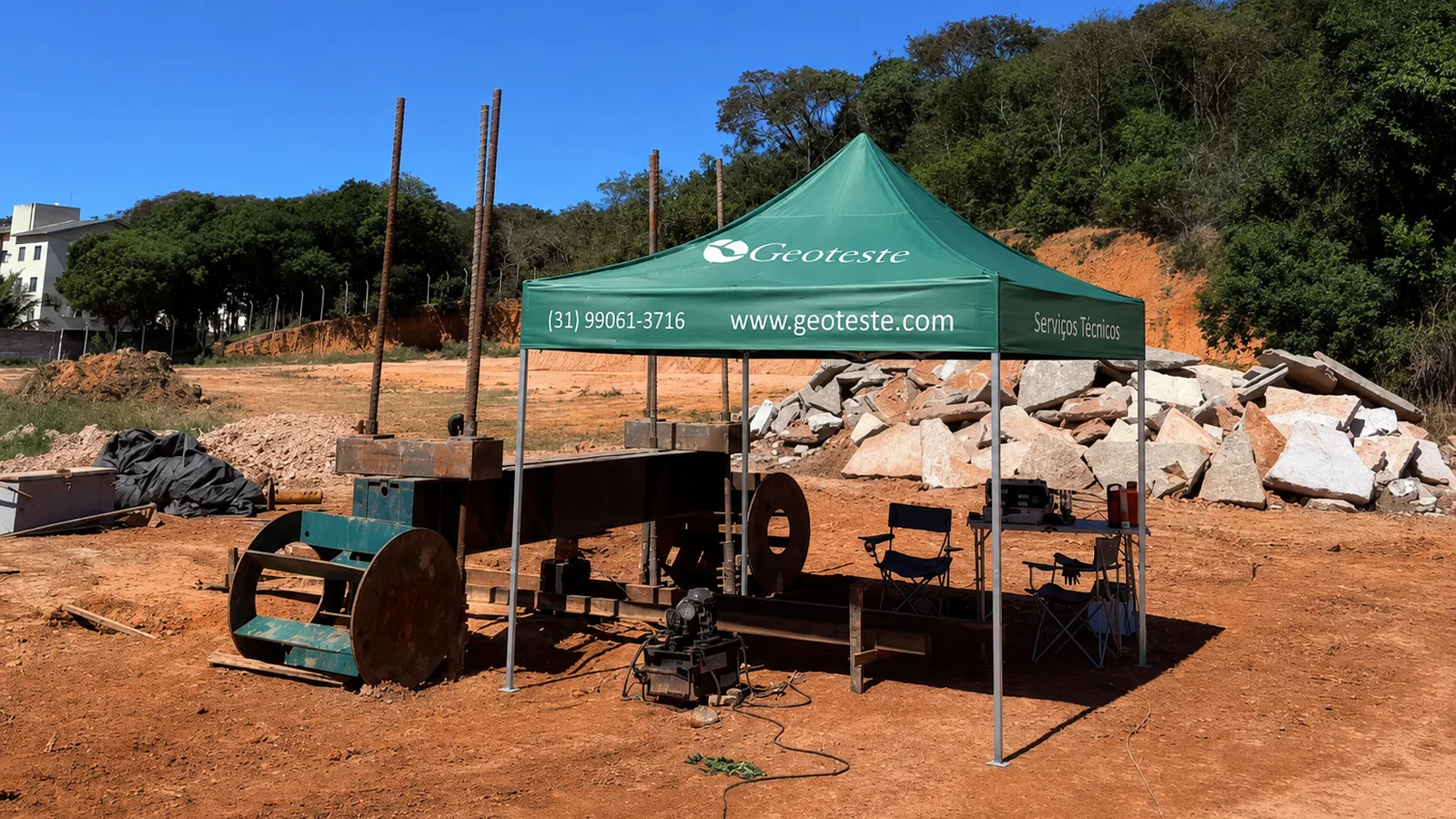
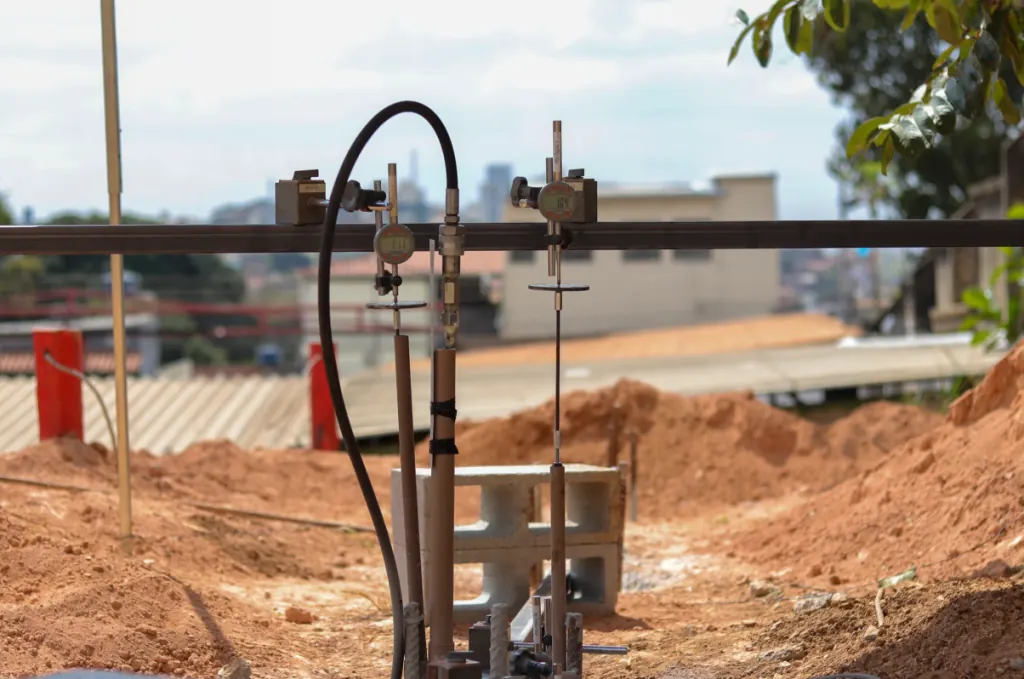
The Bidirectional Static Load Test is an important method for verifying the load capacity of foundations and structures. It allows obtaining information about the load distribution along the pile shaft, which can be a useful tool for good optimization of the foundation design.
In this article, we explain the importance of performing this test, how its measurement system works, the results we can obtain, and its advantages. Continue reading to learn about this technology mastered by Geoteste.
The main advantages of the Bidirectional Test are:
- In this method, it is possible to measure the actual lateral friction of the pile when dimensioned for the pile portion below the hydraulic jack to overcome the pile portion above it.
- Safety is another advantage: There is no need to transport metallic profiles, move heavy loads, or rupture tie rods.
- Possibility of using several jacks together to mobilize high loads at a much lower cost than other types of tests.
The Bidirectional Static Load Test is a relatively simple method to perform and can be applied to various types of foundations. Geoteste performs Bidirectional Static Load Tests in compliance with standards NBR 6122:2022 and NBR 12131:2006.
How does the test work?
The test is performed as follows:
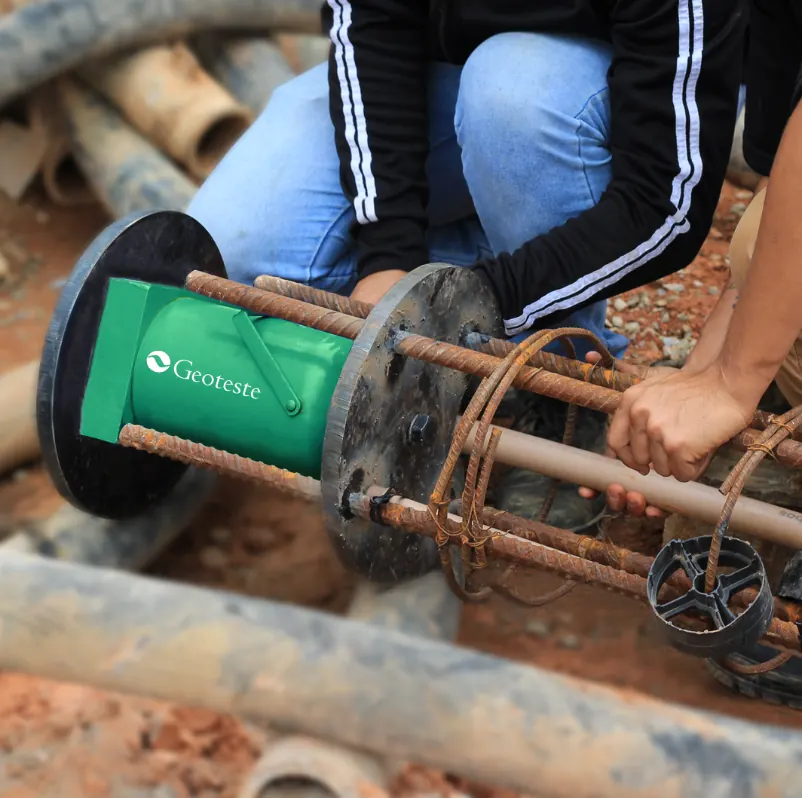
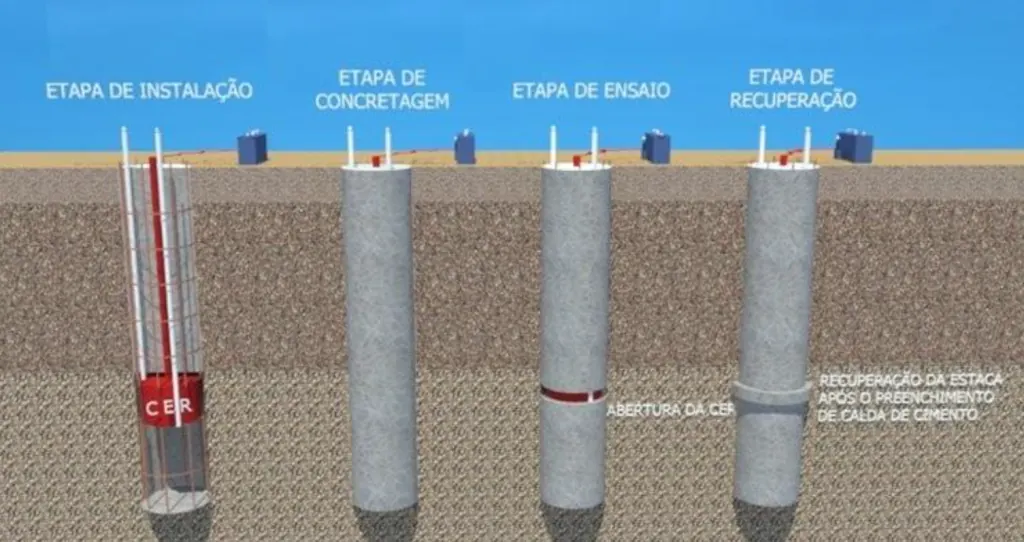
- Expansive cells or jacks are installed along the pile shaft, at a depth designed in the project.
- The load is applied gradually, in opposite directions, until the load capacity of one side of the pile is reached.
During the test, the settlements of the pile top and toe are monitored.
Test results
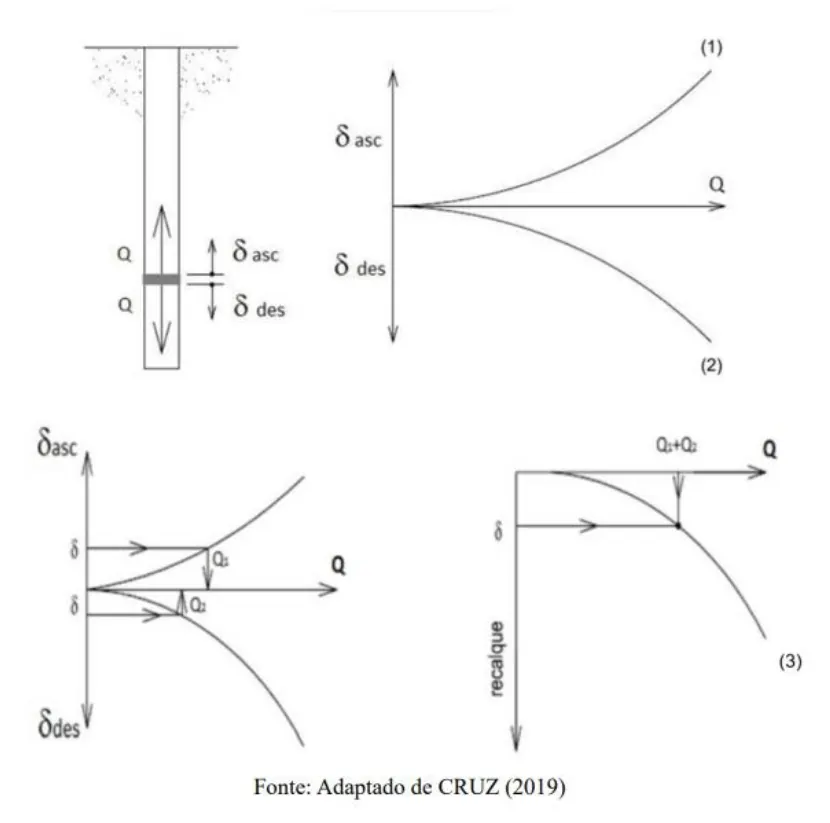
The Bidirectional Static Load Test presents three curves as results:
- Curve 01: load vs. settlement curve of the pile top, corresponding to lateral friction.
- Curve 02: load vs. settlement curve of the lower portion, corresponding mainly to the pile toe.
- Curve 03: load vs. settlement curve equivalent to the complete pile.
After the test is performed, the crack that occurs in the pile shaft during the test, in the region of the cells, is immediately filled with a cement grout injection.
Conclusion
The Bidirectional Static Load Test is a good tool for foundation evaluation, providing important information about the foundation's behavior under different stresses. The test is relatively simple to perform, requiring fewer resources and labor than other methods, and provides accurate results about the foundation's behavior.