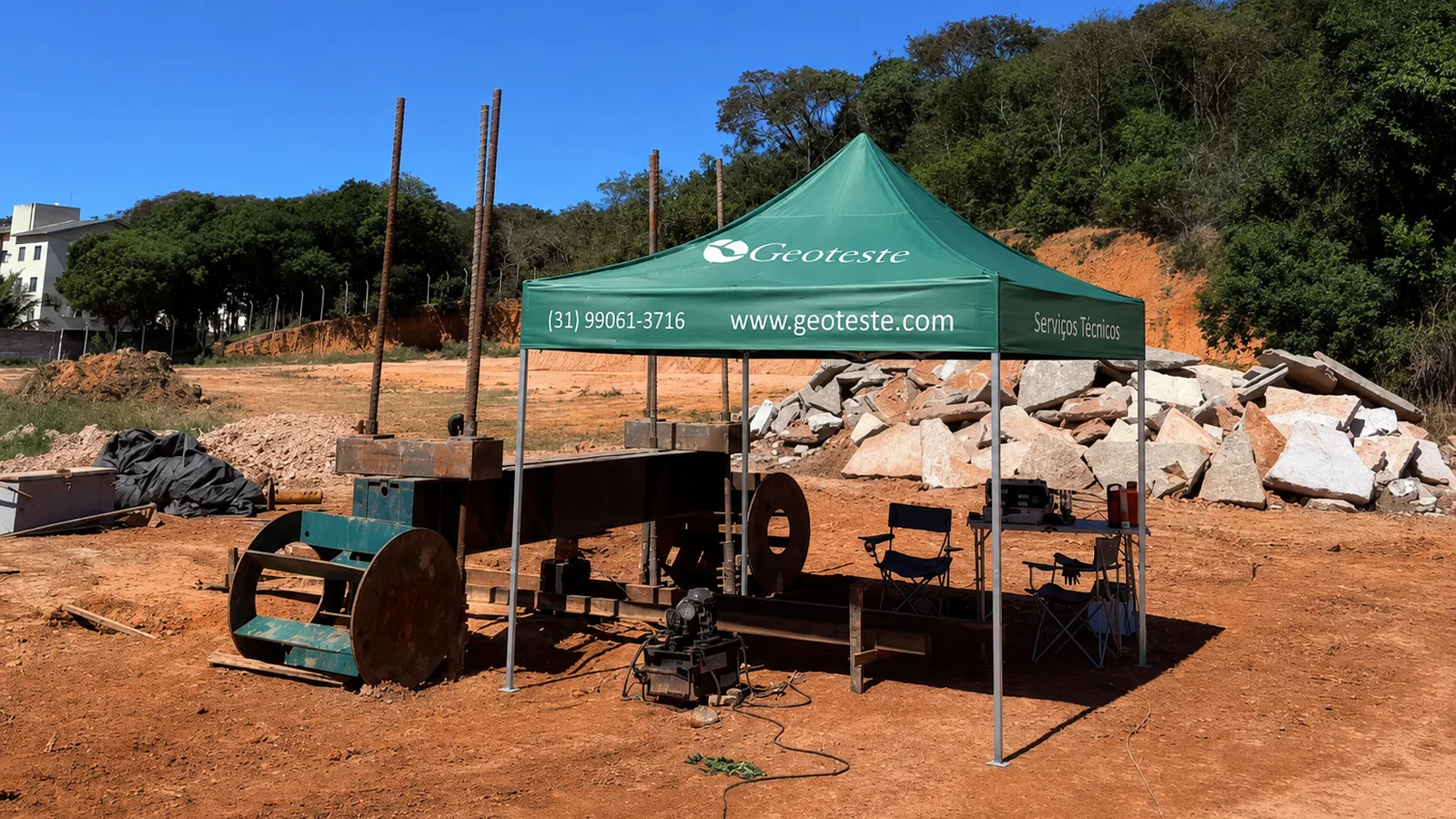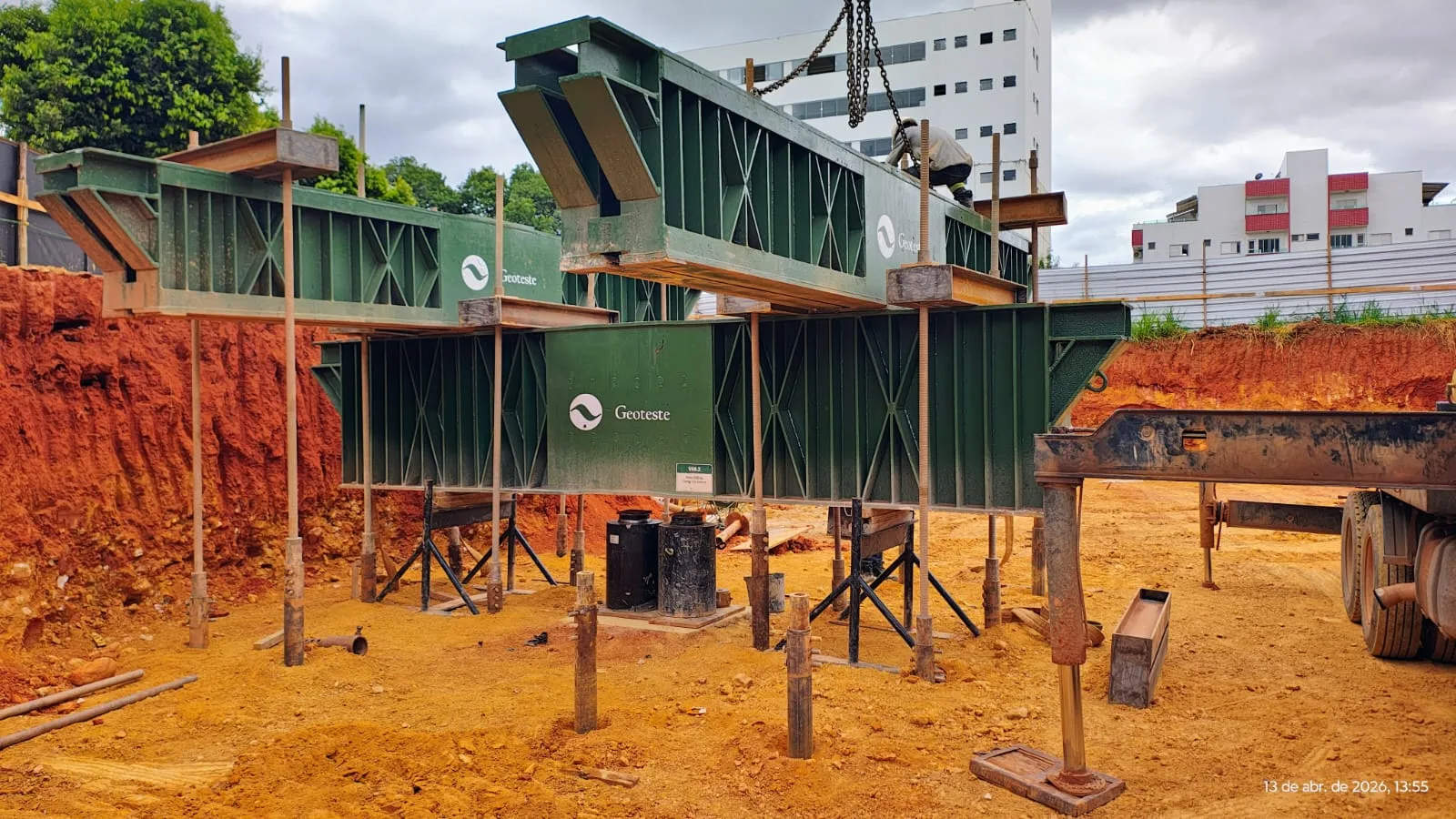
Also known as PDA, the dynamic load test is a safe, technological test that provides crucial information about a construction's foundation.
The geotechnical dynamic load test (PDA) aims to evaluate the load capacity of a pile in interaction with the soil, using data obtained through sensors positioned on the pile and an impact system.
Pile preparation
Before performing the test, it is essential to prepare the pile that will receive the impact blow. The pile must have an excavation-free height between 1.0 m and 1.50 m, allowing for the correct positioning of the sensors (accelerometers). In addition, it is necessary to prepare a reinforcement block on top of the pile, with the same geometry as the pile itself (whether cylindrical, square, or other shapes). This block is fundamental to withstand the initial impact and ensure that the section of the pile that will be used during the structure's service life is not affected.
Test execution
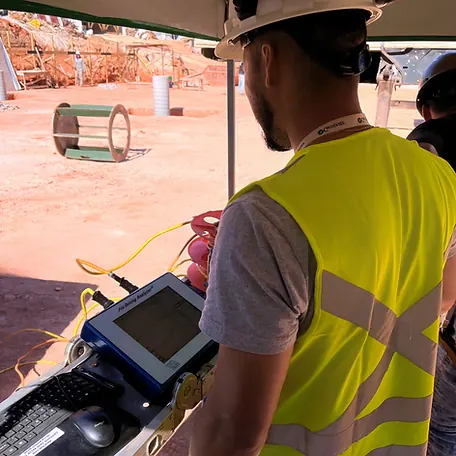
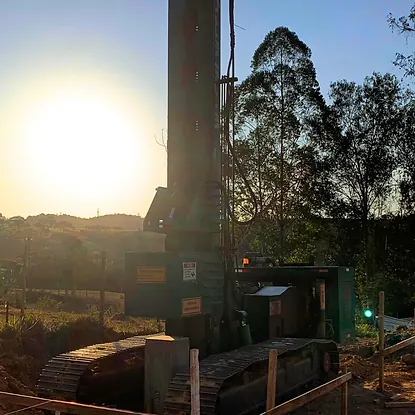
With the reinforcement block prepared and the area free for sensor positioning, we proceed to test execution. There are three main methods to implement the impact system: using a pile driver, a crane system with a tower, or a hammer. These systems are designed to release a weight from a certain height, and the impact generated on the pile is then measured.
Data analysis
The data captured by the sensors are stored on a computer and subsequently analyzed using the CAPWAP (Case Pile Wave Analysis Program) software. From this analysis, it is possible to determine the soil deformation caused by the impact, as well as the pile's load capacities, including lateral friction and toe resistance. Finally, a report is generated, containing all relevant data and the pile's safety factor compared to the designed working load.
Interested in learning more about how to ensure the quality and safety of your foundation? Contact us and discover how our services can assist in the success of your project!