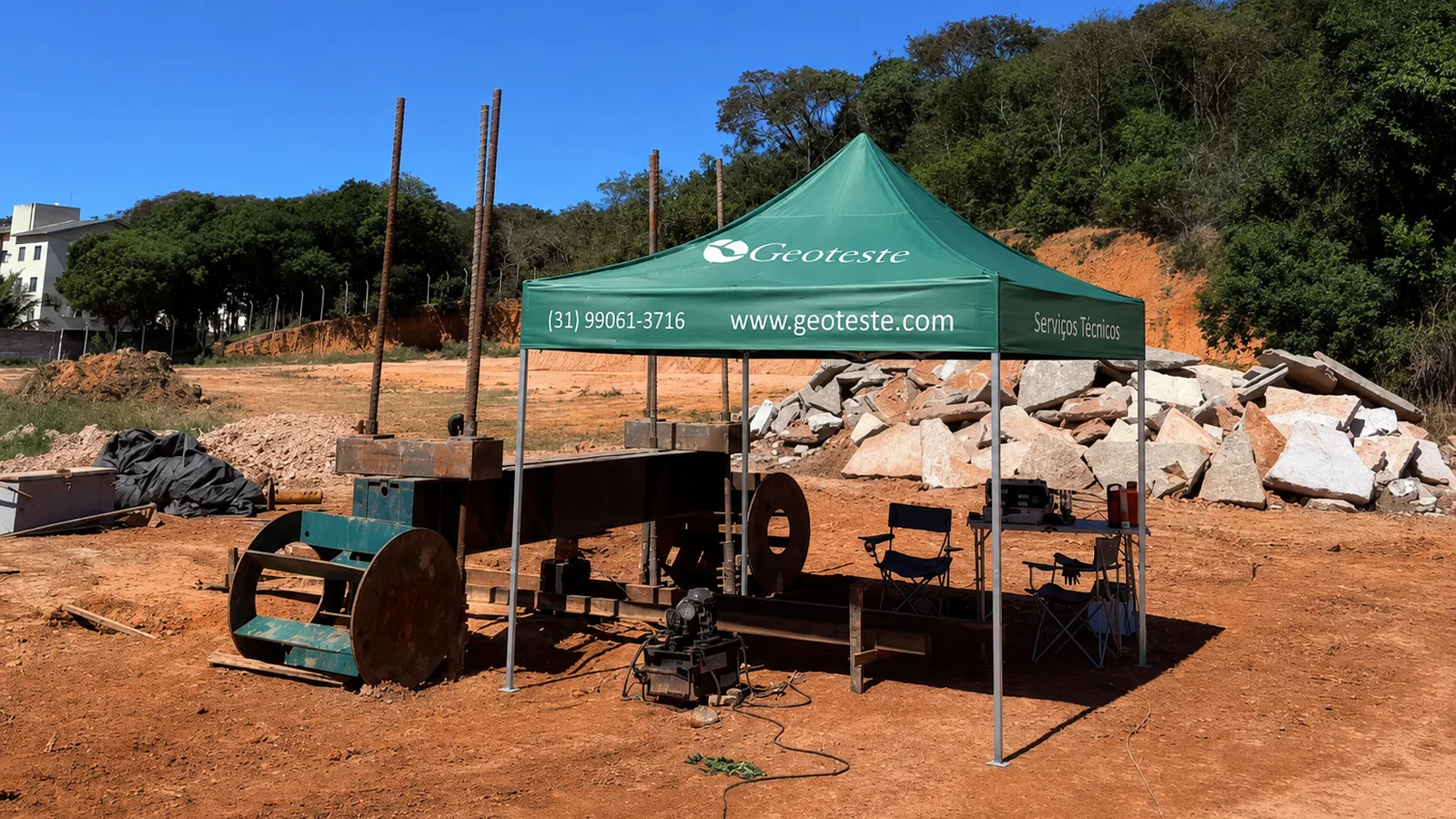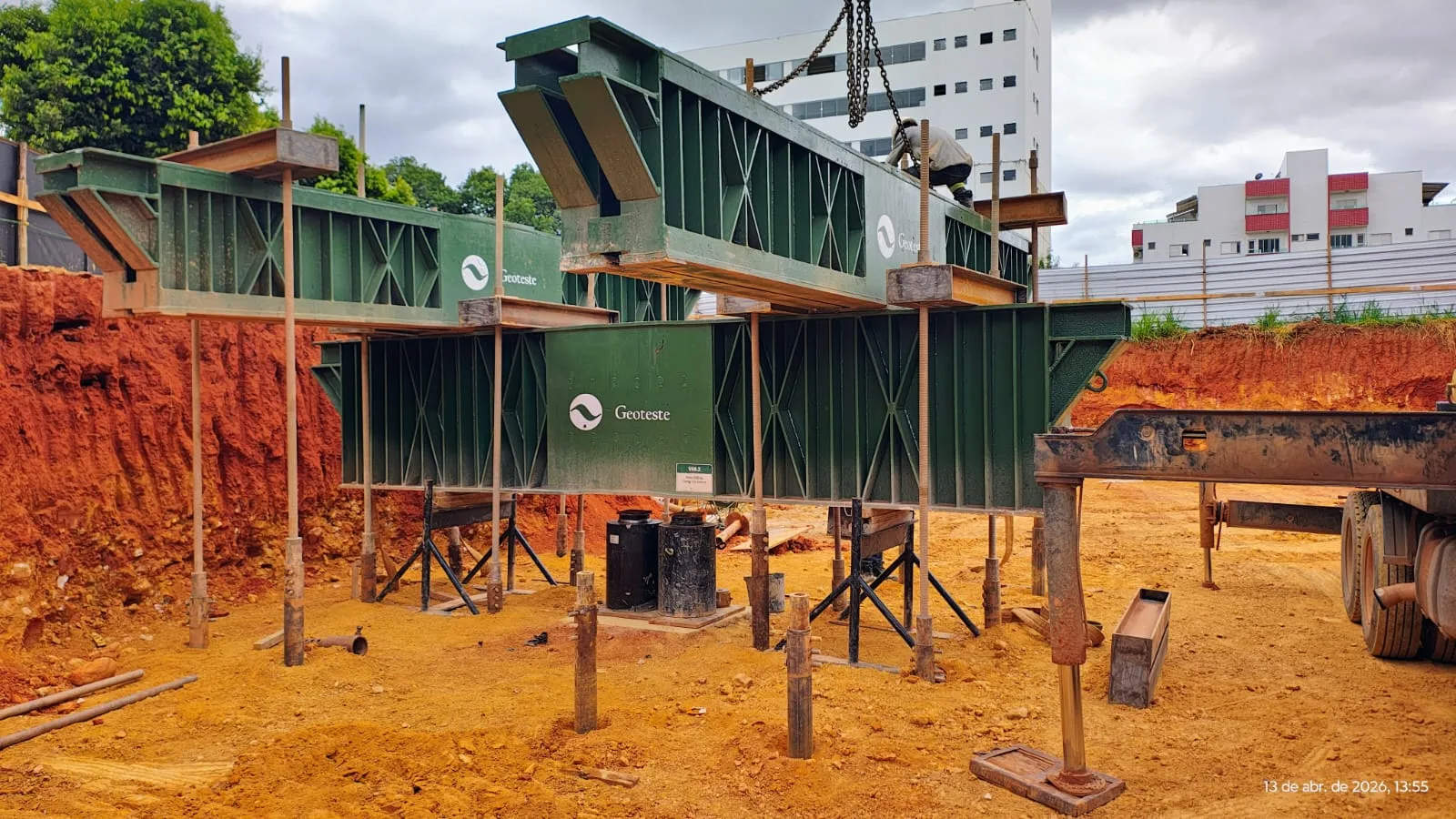
The success or failure of a foundation, as well as the potential appearance of problems, can originate from or depend on an immense variety of aspects. Load testing is the only method to evaluate whether a foundation meets the specifications outlined in the design.
It is not certain when the first load test occurred, however, according to Timosshenko (1953), probably the first record comes with Galileo Galilei, who conducted loading tests, subjecting certain structures to specific types of loads to study the acting stresses. By observing structures and the resistance of their materials, he concluded that resistance is proportional to the cross-sectional area.
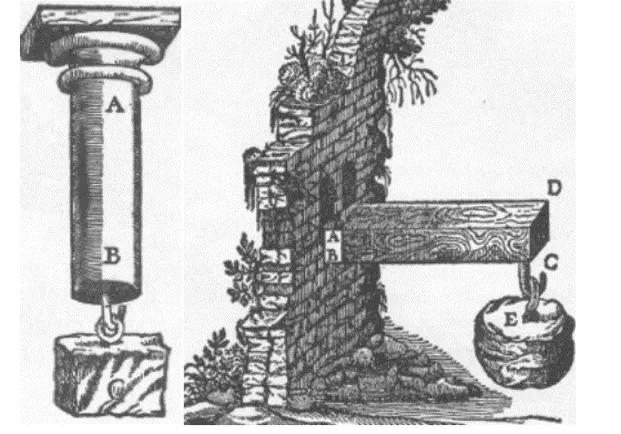
Before Galileo, knowledge was passed from builder to builder, and constructions were sized according to intuition, trial and error of the person responsible for the building's construction. In foundation structures, the theoretical basis developed in parallel with the use of the empirical method.
It is impossible, therefore, to talk about the importance of load testing in foundations without mentioning how these structures are designed and dimensioned. Furthermore, it is interesting to draw a historical parallel between the development of semi-empirical methods, which are currently used for foundation design and dimensioning, and the use of load testing to assess the capacity of a foundation.

Good civil engineering practices are cataloged through standardization. Worldwide, the standardization process emerged in parallel with the industrial revolution, with the first recorded discussion in the second half of the 19th century. As there was a perception that the cost of standardization would be high and standards would quickly become obsolete, the first effective effort only occurred at the beginning of the 20th century with the International Electrotechnical Commission (IEC) congress.
In Brazil, the standardization process was somewhat delayed, as the first industries in the national territory only appeared in the 1930s. The creation of ABNT, Brazilian Association of Technical Standards (Associação Brasileira de Normas Técnicas) only occurred in 1937.

From the standardization process, several semi-empirical methods for predicting load capacity for the design of deep foundations emerged. These load capacity prediction methods are various forms of linear regression comparing the number of blows obtained through the SPT (Standard Penetration Test) with the load obtained through load testing.

The most used calculation methods include: Aoki-Veloso (1975), Décourt-Quaresma (1978, 1982,1987), Pedro Paulo Velloso (1981), Urbano Alonso (1996), Antunes-Cabral (2000), Teixeira (1996), Lizzi (1982), Phillipphonnat (1986), Brasfond (2006), Fundesp (1977/87), among others. Based on soil investigation, these design methods assist the designer in estimating the ideal pile diameter and length to meet the load capacity requirements of the pile-soil system.
Therefore, the historical importance of load testing for the development of calculation methods is undeniable. However, even today, this tool is of paramount importance for engineering, as soil is by definition heterogeneous and, even now, there is no totally representative prospecting method where the entire ground is fully tested, and the soil composition at all foundation load application points is precisely known. The only way to know exactly the load supported by a foundation is through load testing.
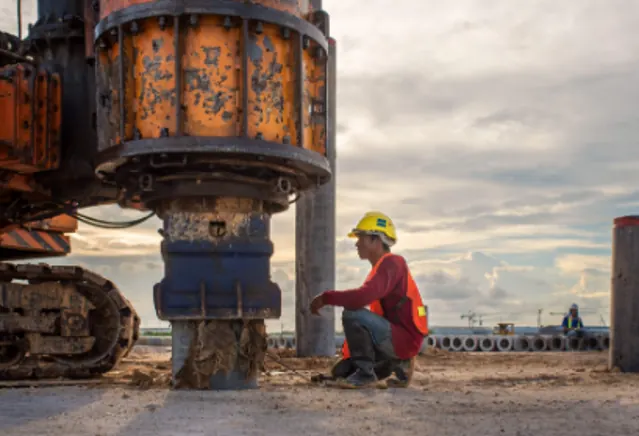
That said, there are lengths and loads predicted in the design, termed theoretical and actual, justified by Cintra (2013) due to three reasons: imperfections of load capacity calculation methods, which are approximate, never exact, variability of soil characteristics, and the designer's decision in adopting the pile length.
Therefore, when the designer opts for piles of uniform length, the dispersion of load capacity increases due to soil heterogeneity. On the other hand, by adopting stopping criteria for piles, such as refusal for driven piles, or torque evaluation for excavated piles, the oscillation of pile length will be greater.

Aware of all these nuances present in foundation design, ABNT NBR 6122/2019, Design and execution of foundations, recognizes that foundation engineering is not an exact science and that risks are inherent to any activity involving natural phenomena or materials. Still according to NBR 6122/2019, which is considered the “mother standard for foundations,” in item 9.2: Performance of foundation elements, it is suggested to perform load tests on 1% of the project's piles.
In addition to the recommendation for testing 1% of the piles, the standard makes load testing mandatory for special works such as bridges and viaducts, and if the stress of the piles defined by the designer is greater than the maximum stress suggested in Table 6 of item 9.2.
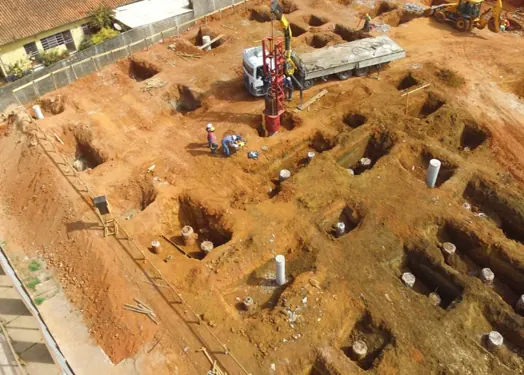
In parallel with the standard's suggestions and contrary to what many believe, load tests can even represent an economy for projects, as they can point out inconsistencies in time for correction. For driven piles, for example, load tests, when performed at the beginning or during construction, can represent both material and linear meter savings through the adjustment of an oversized design, and time and energy savings through increasing the length in an undersized design, bringing much more confidence to projects.