Introduction to Geotechnical Engineering
To ensure the safety of any engineering project, the execution of geotechnical testing is an indispensable step. After all, the famous quote by Karl Terzaghi, "There is no glory linked to foundations," captures the essence of this challenge: the hidden complexity of the subsurface. However, modern engineering has drastically elevated the importance of this discipline, especially with the advancement to taller buildings and unconventional projects, such as wind farms.
Precisely for this reason, to address this demand, engineers need to confront theoretical calculation models with the reality of the ground. In this context, field tests consolidate as a strategic tool in Foundation Engineering. In short, they are crucial not only to guarantee safety and optimize designs, but also to drive the continuous development of increasingly precise and efficient calculation models.
What is Geotechnical Testing?
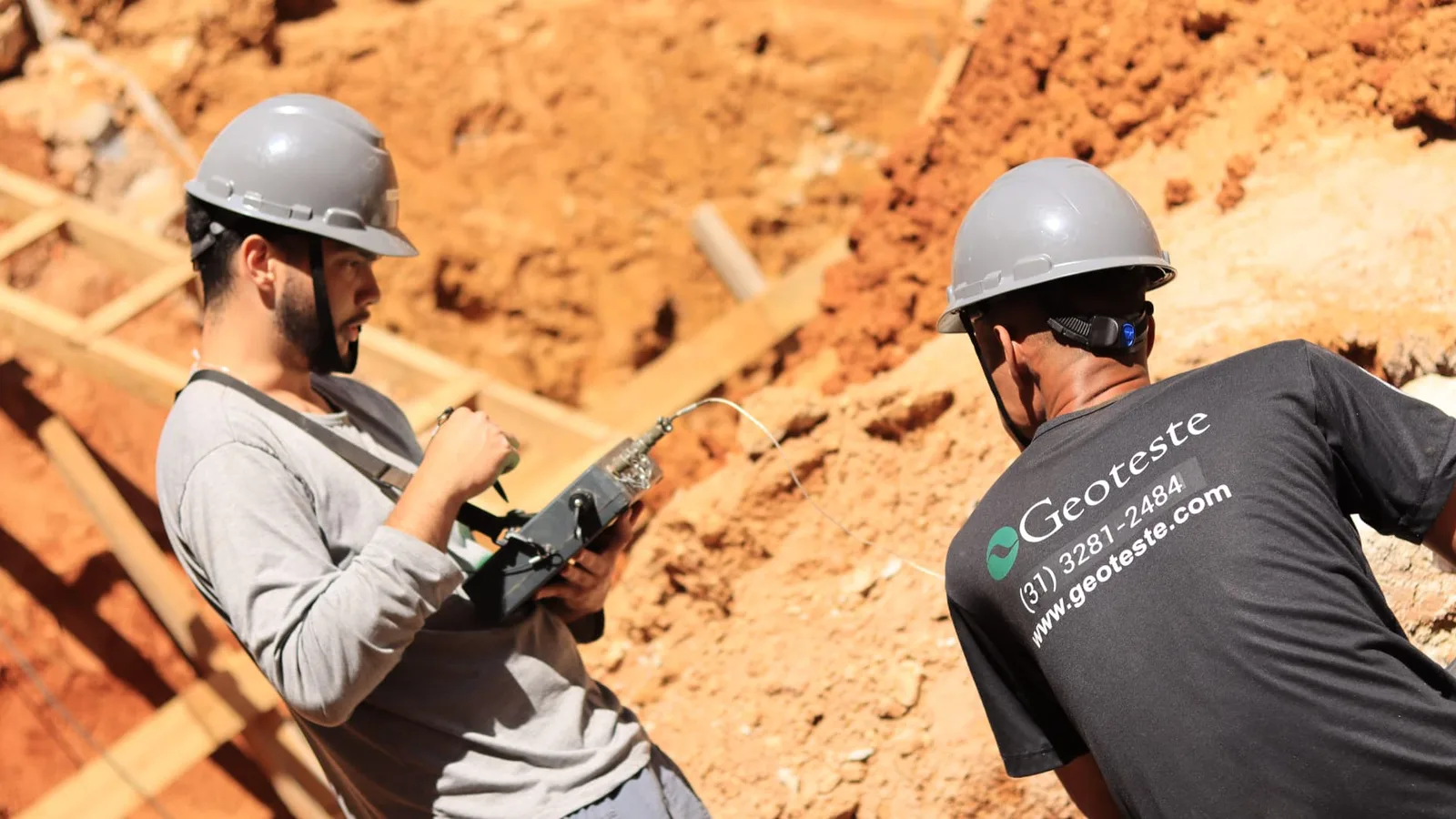
Essentially, geotechnical testing refers to engineering procedures that specialists apply to soil, rocks, or foundations with the purpose of determining the mechanical parameters and the physical and chemical characteristics of the studied subsurface. In other words, they are the "examinations" that reveal the health and capacity of the ground.
Main Objectives:
- Define the ideal type and depth of the foundation;
- Estimate the bearing capacity of the soil and the foundation itself;
- Certify the resistance capacity of piles after installation;
- Ensure the safety, durability, and cost-effectiveness of the structure.
Why is Geotechnical Testing Important?
Building without knowing the soil conditions or without checking the foundations undoubtedly means assuming high risks. Consequently, the consequences of neglecting this stage can be severe.
Possible Consequences:
- Structural fissures and differential settlements;
- Localized subsidence in the structure;
- Loss of stability in tall or very heavy structures;
- Significant increase in costs for reinforcement and rework.

Source: State University of Campinas/Reproduction
Practical Example: The Leaning Buildings of Santos (SP)
Perhaps one of the most emblematic chapters in Brazilian engineering, as detailed by architecture portals, can be seen firsthand on the Santos waterfront: the famous leaning buildings. First, it is important to understand that this scenario is not a mystery, but a valuable technical lesson. The main cause of the settlements that tilted the structures was the disregard for a technical recommendation not to exceed a stress of 50 kPa at the top of the first layer of soft marine clay, characteristic of the region.
Fortunately, engineering evolves, and the most modern buildings erected in the same area no longer repeat past mistakes. The solution, therefore, came through the combination of new deep foundation technologies, capable of reaching more resistant soil layers, and a much deeper knowledge of the subsurface. Certainly, this knowledge was acquired through a rigorous geotechnical testing program, including soundings, load tests, and continuous monitoring of settlements.
Types of Geotechnical Testing
In general, we can group the tests into two main blocks, each with a specific function in a project's life cycle.
1. Soil Investigation Tests
These are the first tests performed, aiming to map and characterize the subsurface before the design.
a) SPT Sounding (Standard Penetration Test)
Currently, this is the most widely used test by engineers in Brazil, as it provides information on soil resistance through the driving of a standard sampler. In addition, the report from this test characterizes the different soil layers, the groundwater level, and provides data for the main foundation calculation methods, as per norm NBR 6484.
b) CPT and CPTu (Cone Penetration Test)
Cone (CPT) and piezocone (CPTu) tests consist of pressing a conical tip into the ground. Thus, they offer the advantage of being able to separately evaluate tip resistance and lateral friction, something that the SPT cannot distinguish with the same precision.
c) Other Complementary Tests
- Permeability Test: Measures the soil's capacity to allow water passage (NBR 14545).
- DMT (Marchetti Dilatometer): Provides soil deformability parameters.
- Vane Test: Used to determine the shear strength of soft clays.
2. Foundation Verification Tests
Subsequently, after the foundations are installed, these tests verify whether the actual performance corresponds to what was designed.
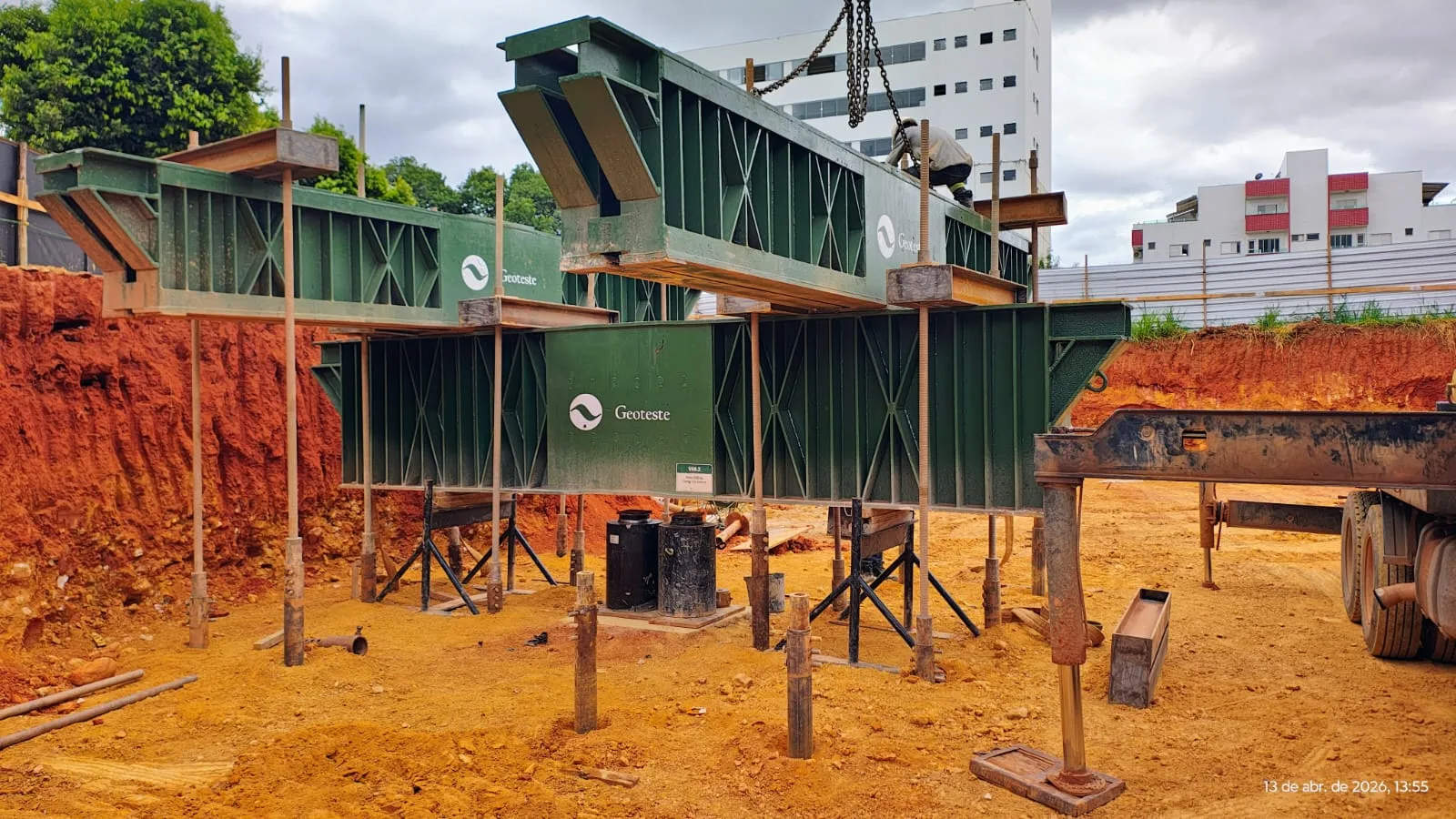
a) Static Load Test (PCE)
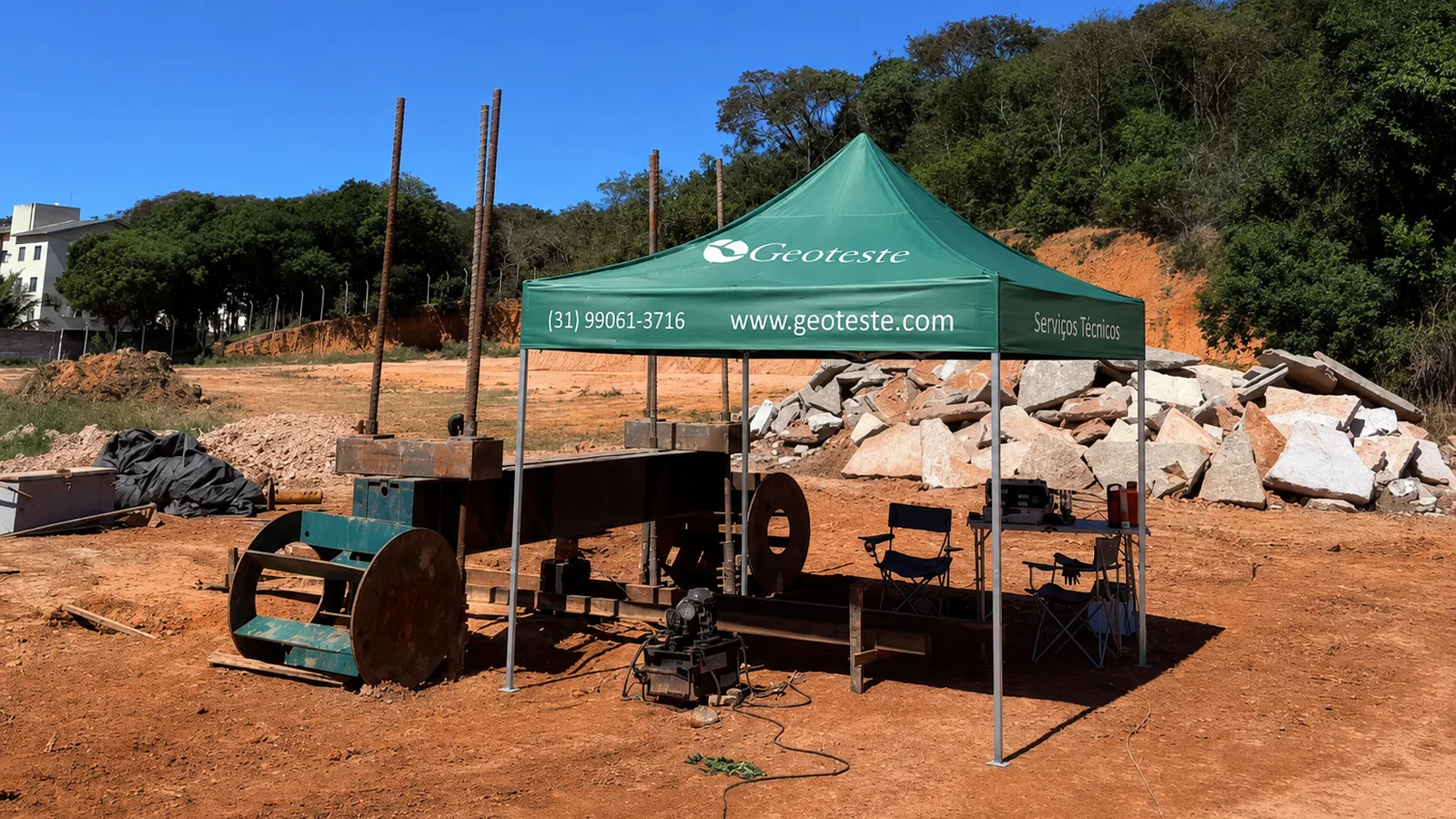
The static load test is the "gold standard" test for verifying the bearing capacity of a pile. Basically, it consists of loading the pile with load increments and measuring its displacements, following NBR 12131.
b) Dynamic Load Test (PDA)
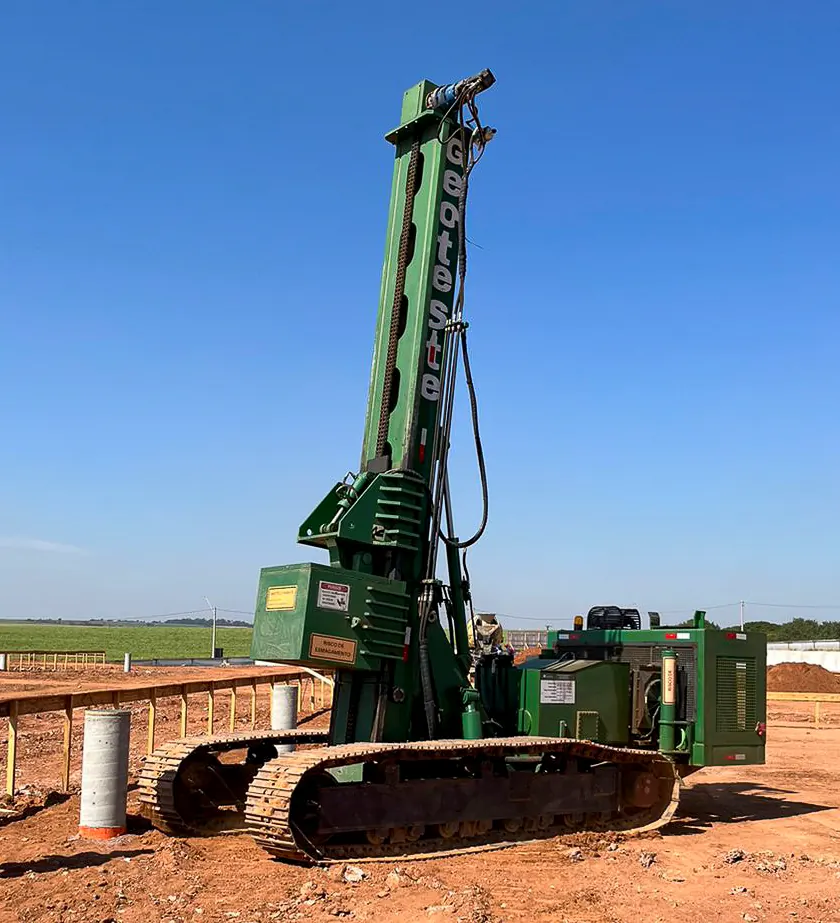
The PDA test, in turn, uses the impact of a hammer on the pile to measure parameters that determine its resistant capacity and structural integrity (NBR 13208).
c) Pile Integrity Test (PIT)
Similarly, the PIT test uses low-strain waves to reveal defects such as fissures, diameter reductions, or voids in the pile body.
d) Other Verification Tests
- Plate Load Test: Used to verify the bearing capacity in shallow foundations and pavements (NBR 6489).
- Cross-Hole Sonic Logging (CSL): Evaluates the integrity of concrete in bored piles and diaphragm walls.
- Pull-Out Test: Measures the tensile strength of piles, common in solar plants.
- Bidirectional Test: A static load test that uses an expansive cell within the pile itself to apply the load.
Applicable Technical Norms
Finally, the execution of geotechnical testing is rigorously guided by national and international technical norms, which ensure the standardization and reliability of the results.
Brazilian (Brazilian Association of Technical Standards NBR):
- NBR 6122: Design and installation of foundations
- NBR 6484: SPT Sounding
- NBR 12131: Static load test
- NBR 13208: Dynamic load test
International (ASTM, ISO):
- ASTM D1586: SPT
- ASTM D5778: CPTu
- ASTM D1143: Static load test
- ASTM D5882: PIT
FAQ, Geotechnical Testing
What is geotechnical testing?
Geotechnical testing refers to engineering procedures applied to soil, rocks, or foundations with the purpose of determining the mechanical parameters and physical and chemical characteristics of the studied subsurface.
What are the main types of tests?
- Soil investigation: SPT, CPT, CPTu, permeability, DMT, Vane Test.
- Foundation verification: PCE, PDA, PIT, CSL, Pull-Out and Bidirectional.
When to contract foundation verification testing?
According to the norm, NBR 6122 makes the execution of load tests mandatory for projects with a number of piles greater than specified or with working stress above the stipulated. Additionally, engineers may request preliminary load tests to optimize designs and reduce normative safety factors.