When it comes to quality control in deep foundations, few decisions are as important as choosing the company responsible for performing PDA (Pile Driving Analyzer) testing.
Although many companies offer this service, differences in equipment, team experience, execution methodology, and interpretation capabilities can directly impact the reliability of reports, the structural safety of the project, and even the project costs.
In this article, you will understand which criteria should really be considered before hiring a company to perform PDA tests and dynamic load tests.
What is PDA testing?
PDA (Pile Driving Analyzer) testing is a dynamic test used to evaluate the behavior of piles during driving or restrike.
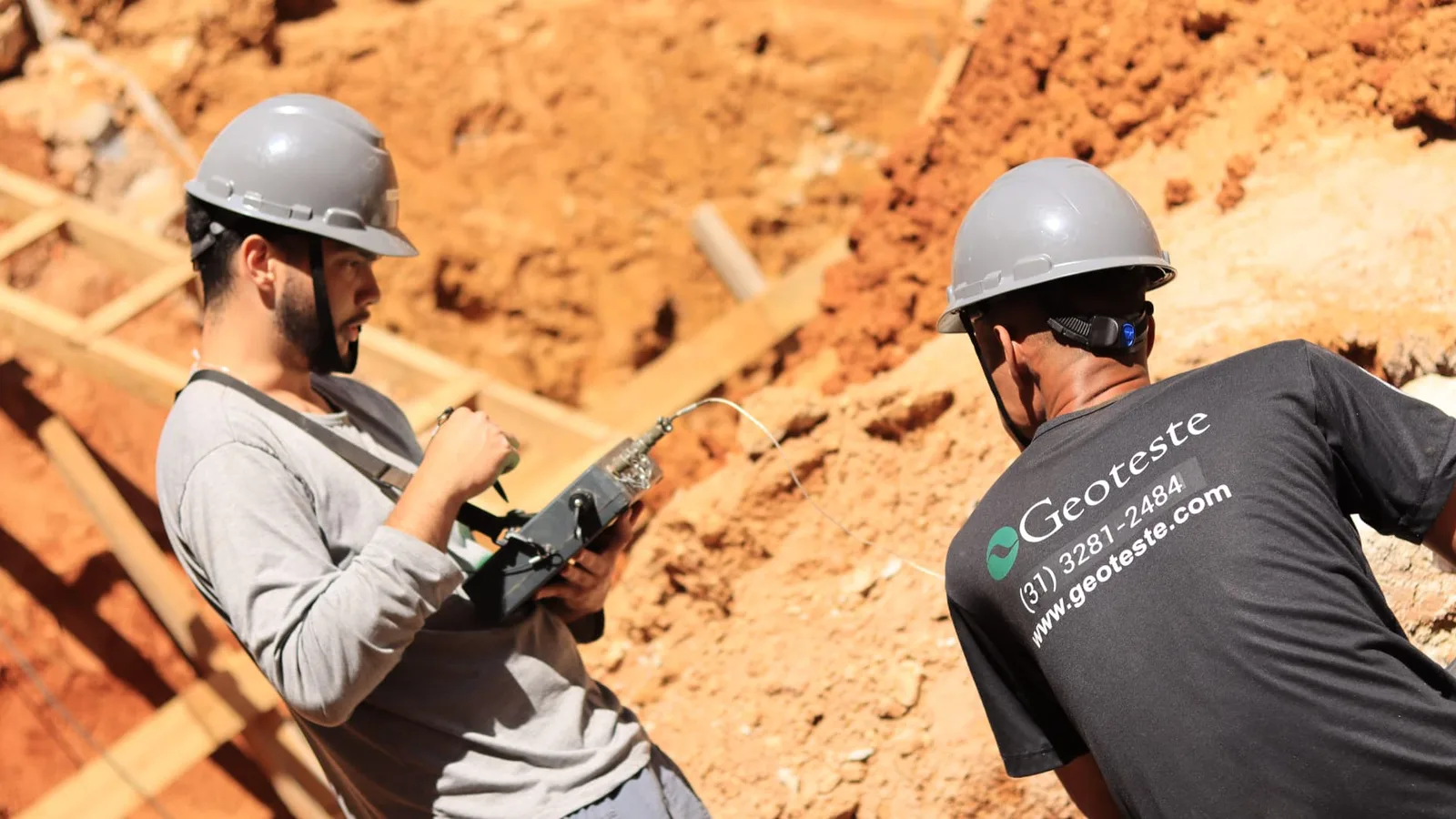
By installing strain transducers and accelerometers on the pile, the system records the waves generated by hammer impacts, allowing estimation of parameters such as:
- pile bearing capacity;
- mobilized resistance;
- structural integrity;
- transmitted energy efficiency;
- acting stresses during impacts;
- foundation performance.
In many cases, the results can be refined through CAPWAP analysis, widely used in geotechnical engineering to estimate the distribution of resistance along the pile.
Why does the choice of company make such a difference?
The equipment, by itself, does not guarantee a good result.
The quality of the test depends on the combination of technology, field experience, geotechnical knowledge, and correct data interpretation.
An imprecise report can lead to erroneous decisions, such as:
- unnecessary installation of new piles;
- oversizing of the foundation;
- project delays;
- increased costs;
- need to repeat tests;
- uncertainties during structure release.
Therefore, hiring solely based on the lowest price is rarely the best decision.
1. Check the company's experience in foundations
Companies specialized in foundation engineering typically have greater knowledge about the behavior of piles in different geological conditions.
It is important to evaluate:
- years in business;
- number of projects executed;
- experience in industrial, commercial, infrastructure, and mining projects;
- knowledge of various types of deep foundations.
The greater the team's experience, the greater the reliability of interpreting field results.
2. Evaluate the technology used
The evolution of equipment has brought significant gains in precision, productivity, and reliability.
Companies that continuously invest in technology can deliver more consistent results and reduce the possibility of operational failures.
When contracting PDA testing, it is worth checking:
- equipment generation;
- state of conservation;
- periodic calibration;
- analysis software used;
- resources for signal acquisition and processing.
The quality of the equipment directly influences the quality of the information collected.
3. Observe the technical team's qualifications
PDA testing is not just about installing sensors and starting data acquisition.
It is necessary to understand foundation behavior, correctly interpret the obtained records, and identify possible interferences that could compromise the analysis.
Prefer companies that have:
- engineers specialized in geotechnics;
- professionals experienced in deep foundations;
- team trained for field execution;
- ability to perform complementary analyses when necessary.
A qualified technical team significantly reduces the risks of erroneous interpretations.
4. Check if the company serves projects throughout Brazil
Large construction companies often have projects distributed across different states.
In this scenario, working with a company capable of national mobilization offers several advantages:
- standardization of procedures;
- greater agility in scheduling;
- reduced need to hire different local suppliers;
- uniformity of technical reports.
This factor is often decisive for companies that execute projects simultaneously in various regions.
5. Analyze the quality of technical reports
The test report will be used by design engineers, consultants, clients, and often will be part of the project's technical documentation.
A good report should present:
- methodology employed;
- pile identification;
- complete graphs;
- parameters analyzed;
- photographic records;
- technical interpretation;
- objective conclusions.
Clear documents facilitate decision-making and add safety to the project.
6. Look for companies that offer technical support
After the report is issued, questions related to the results often arise.
A specialized company should be prepared to discuss the data with the client, provide technical clarifications, and assist in interpreting the obtained information.
This support adds value to the service and contributes to more assertive decisions during project execution.
7. Do not choose solely based on the lowest price
The cost of the test represents only a small portion of the total foundation investment.
An initial saving can result in much higher expenses if it becomes necessary to repeat tests, perform new mobilizations, or correct decisions made based on inconsistent information.
When comparing proposals, evaluate the entire solution:
- technical experience;
- equipment quality;
- team qualification;
- operational capacity;
- service lead time;
- report reliability.
The best cost-benefit almost always lies with the company that delivers greater technical reliability.
How Geoteste meets all these criteria
Over decades of experience in geotechnical engineering, Geoteste has consolidated its position as one of the leading national references in geotechnical testing and foundation quality control.
The company brings together characteristics that make a difference in small, medium, and large-scale projects.
State-of-the-art technology
Geoteste continuously invests in modern equipment for performing geotechnical tests, ensuring high precision in data acquisition and interpretation.
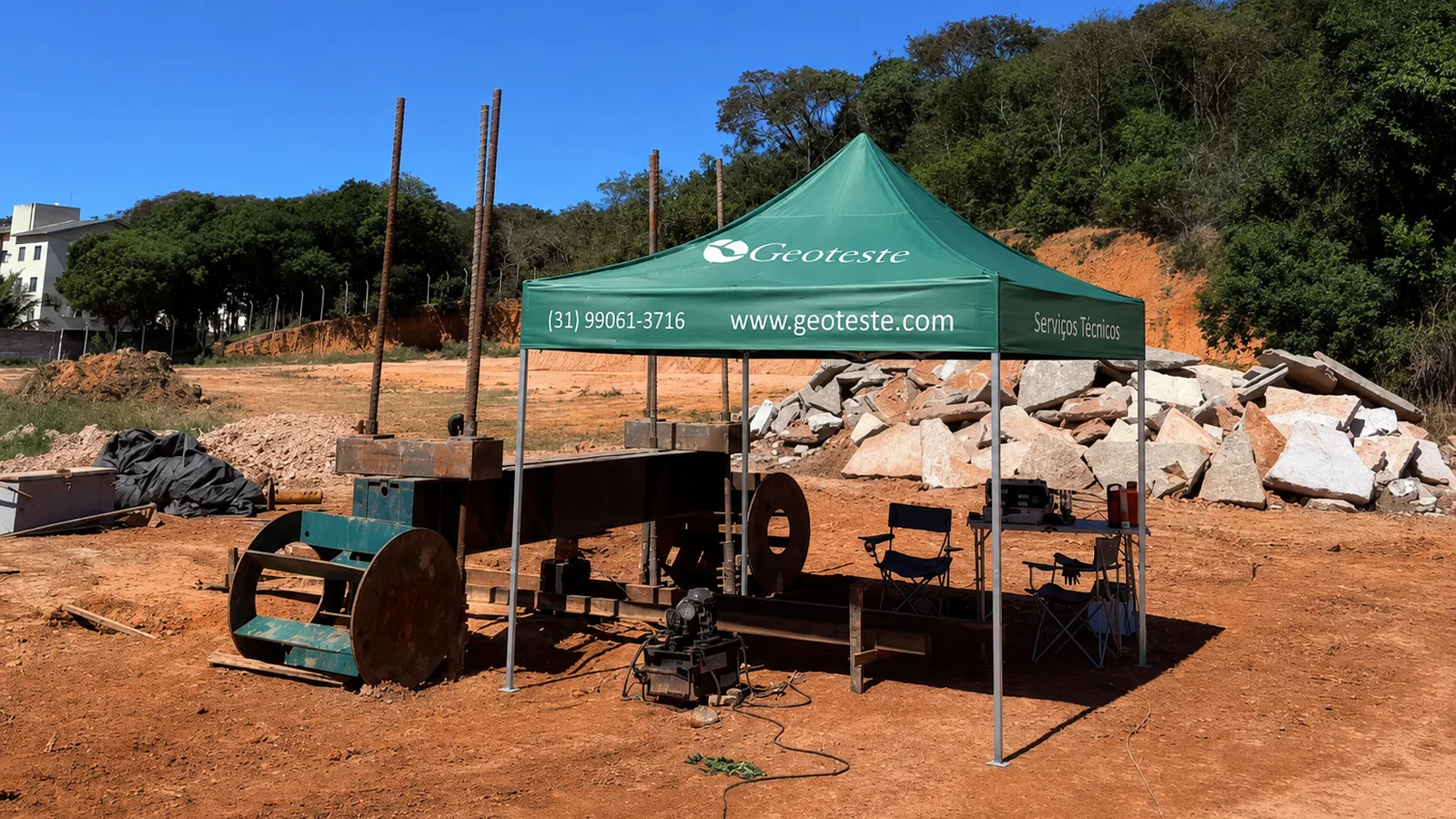
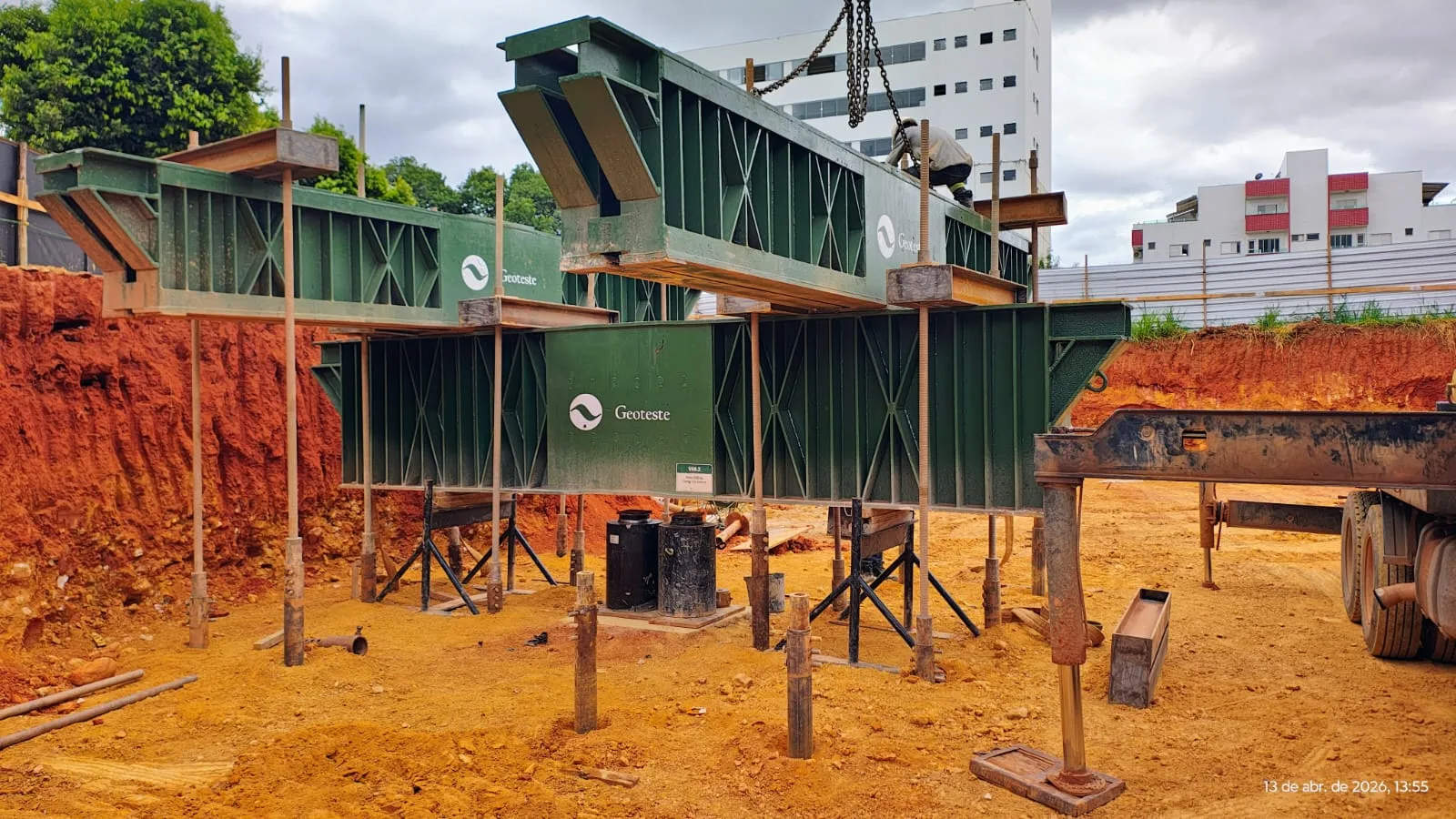
Among its differentiators is the use of Hammer technology, a patented system for dynamic load tests that provides greater reliability, productivity, and quality in test execution.
Highly specialized team
The tests are conducted by engineers and professionals specialized in geotechnics and deep foundations, with extensive experience in different soil types, piles, and executive conditions.
This experience allows for correct interpretation of results and provision of information that truly assists field decision-making.
Nationwide service
Geoteste has the structure for mobilization in any region of Brazil, serving infrastructure, building, mining, energy, sanitation, logistics, industrial, and various other segments.
This operational capability allows it to serve clients with projects distributed across different states, maintaining technical standards across all undertakings.
Experience in different types of foundations
The company performs tests applied to various executive systems, including precast piles, metallic piles, excavated piles, continuous flight auger piles, micropiles, barrettes, and other solutions used in foundation engineering.
Commitment to quality and reliability
More than delivering a technical report, Geoteste provides information that supports engineering decisions with safety, precision, and technical backing.
Each test is executed following rigorous quality control procedures, ensuring consistent results for designers, construction companies, developers, and foundation companies.
Conclusion
Choosing a company to perform PDA tests goes far beyond comparing prices. The quality of equipment, team experience, mobilization capability, report reliability, and technical support offered can directly influence the safety, performance, and final cost of a project.
If your company is looking for a partner with nationwide operations, cutting-edge technology, a specialized team, and extensive experience in geotechnical engineering, Geoteste meets all the requirements to execute PDA tests, dynamic load tests, and other geotechnical tests with a high technical standard.
Request a quote and rely on a team prepared to deliver reliable results anywhere in Brazil.