The importance of the impact system in PDA testing
Undoubtedly, the load capacity of piles is an essential parameter in foundation engineering, as it determines the safety and economy of a project. For this reason, PDA testing (Pile Driving Analyzer) stands out as a modern method, because it analyzes the soil-pile interaction quickly and reliably. The success of the test, however, directly depends on choosing the correct impact system. In this regard, it is crucial that the solution is compatible with the pile, the load, and the project's logistics.
Analysis of impact systems for PDA testing
There are four main impact systems used in the market. We detail, below, the advantages and applications of each of them.
1. Pile driver
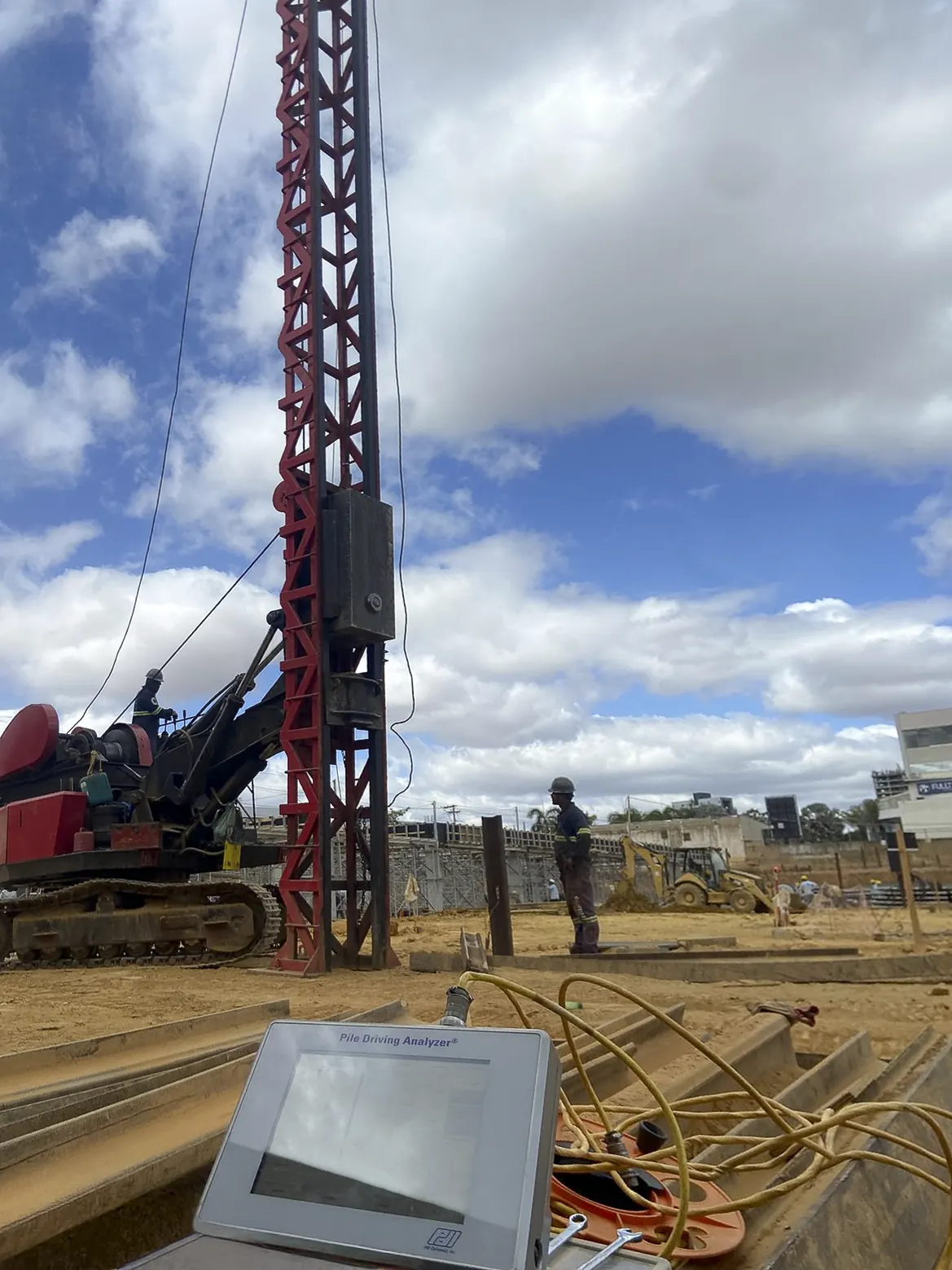
The use of a pile driver is a very practical solution, as it utilizes the same equipment used to drive precast piles. The operation is simple: Geoteste's sensors are installed on the pile, and with each hammer blow, they record the response waves for analysis.
Main advantages:
- Resource optimization: Firstly, it uses equipment already available on site, which reduces mobilization costs.
- Operational agility: Furthermore, it maintains continuous workflow, minimizing interruptions.
- Point of attention: In contrast, the operation requires logistical alignment, given that the equipment is dedicated to Geoteste during the test.
2. Tower with free-fall hammer
In this system, a metal tower guides the free fall of a hammer, which strikes a helmet placed on top of the pile. In order to generate a controlled impact, a Munck truck or crane hoists the weight and, immediately after, releases it precisely.
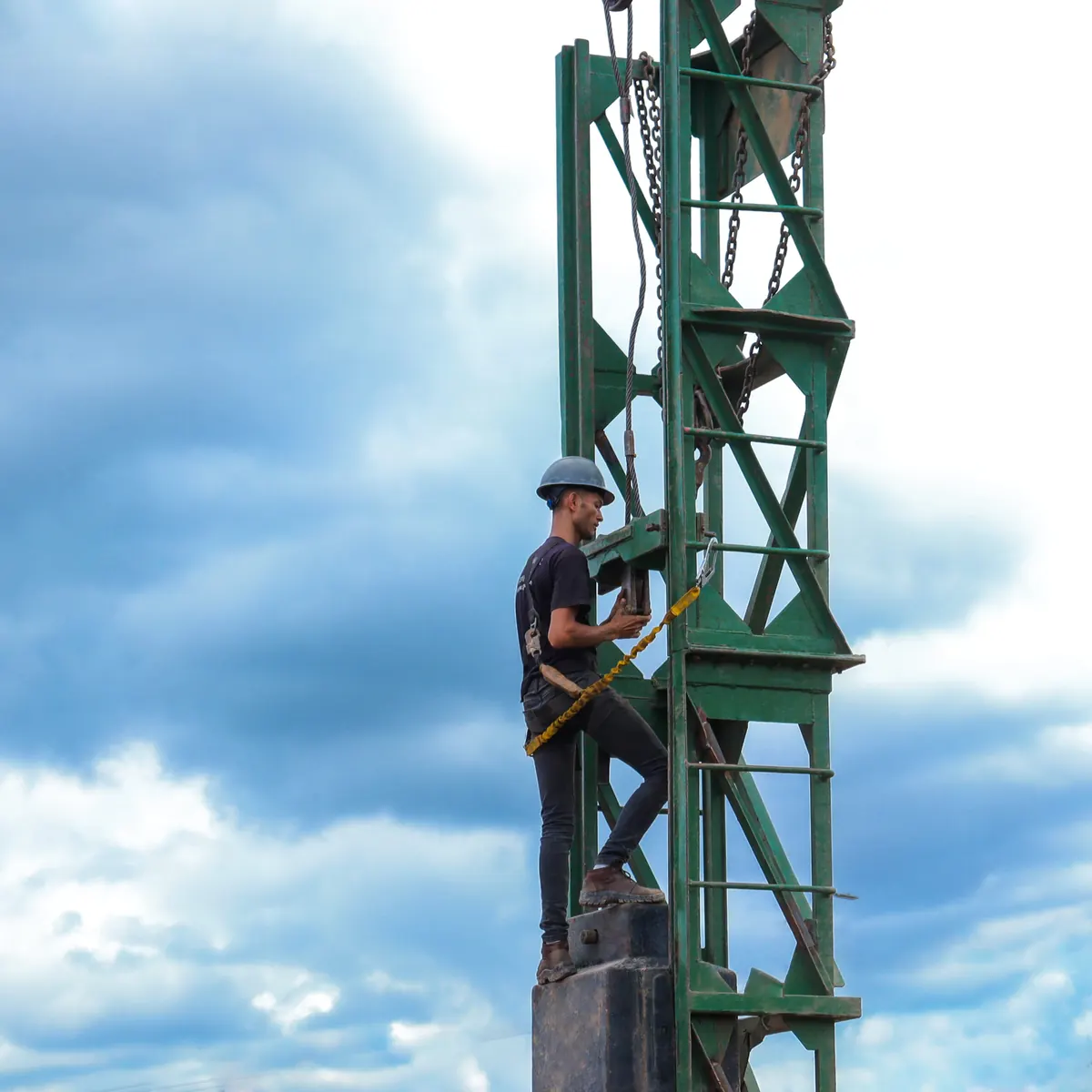
System characteristics:
- Precision and reliability: Ensures more controlled blows, thereby ensuring the quality of the collected data.
- Lifting requirement: As a result, it requires auxiliary equipment, demanding a prior analysis of access and space.
3. Hammer GT20 (automated track-mounted system)
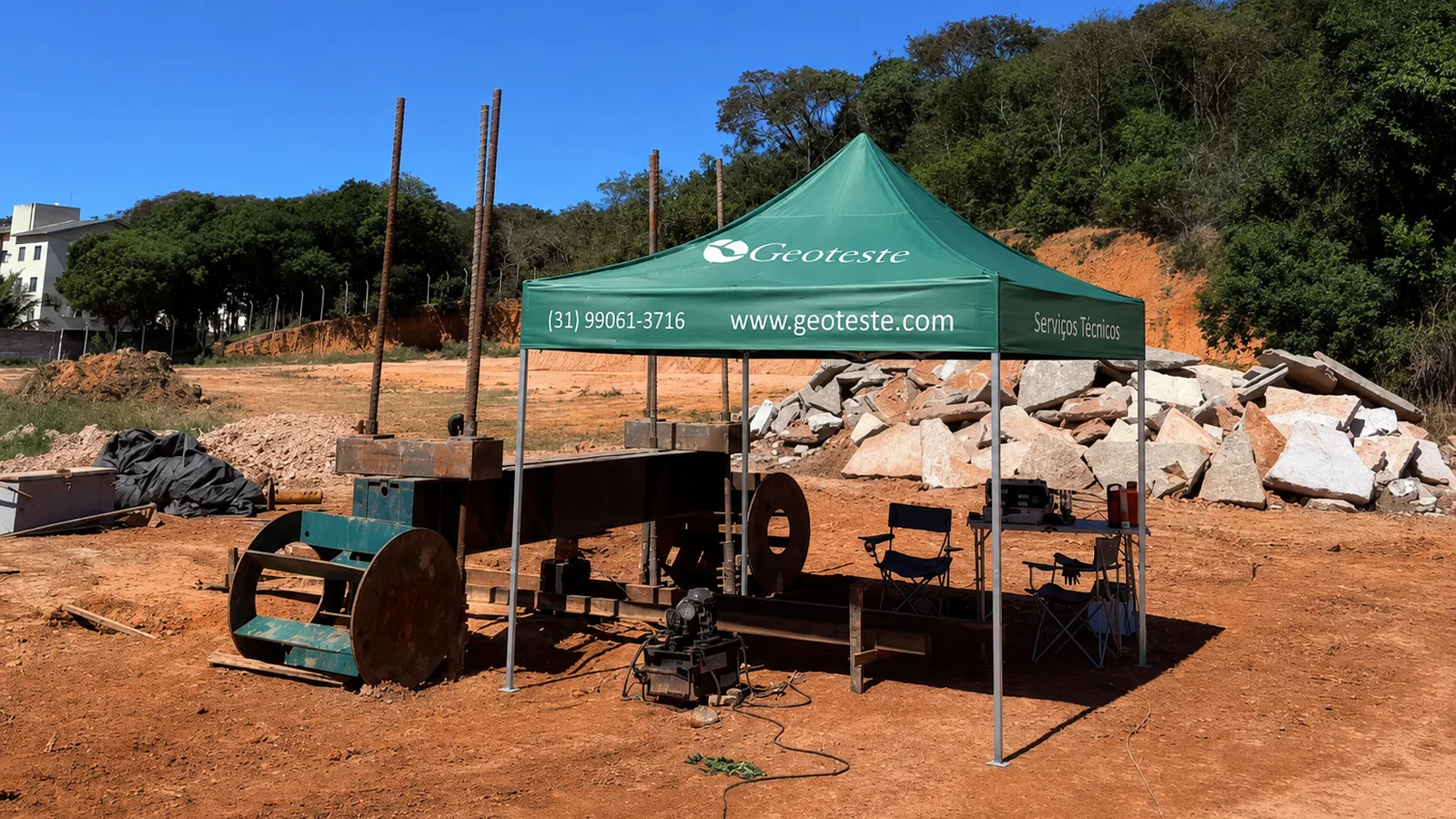
On the other hand, the Hammer GT20 is an innovative solution from Geoteste, created to maximize productivity and safety in PDA testing. It is a track-mounted tower with a hammer, operated by remote control, which, effectively, eliminates the need for cranes.
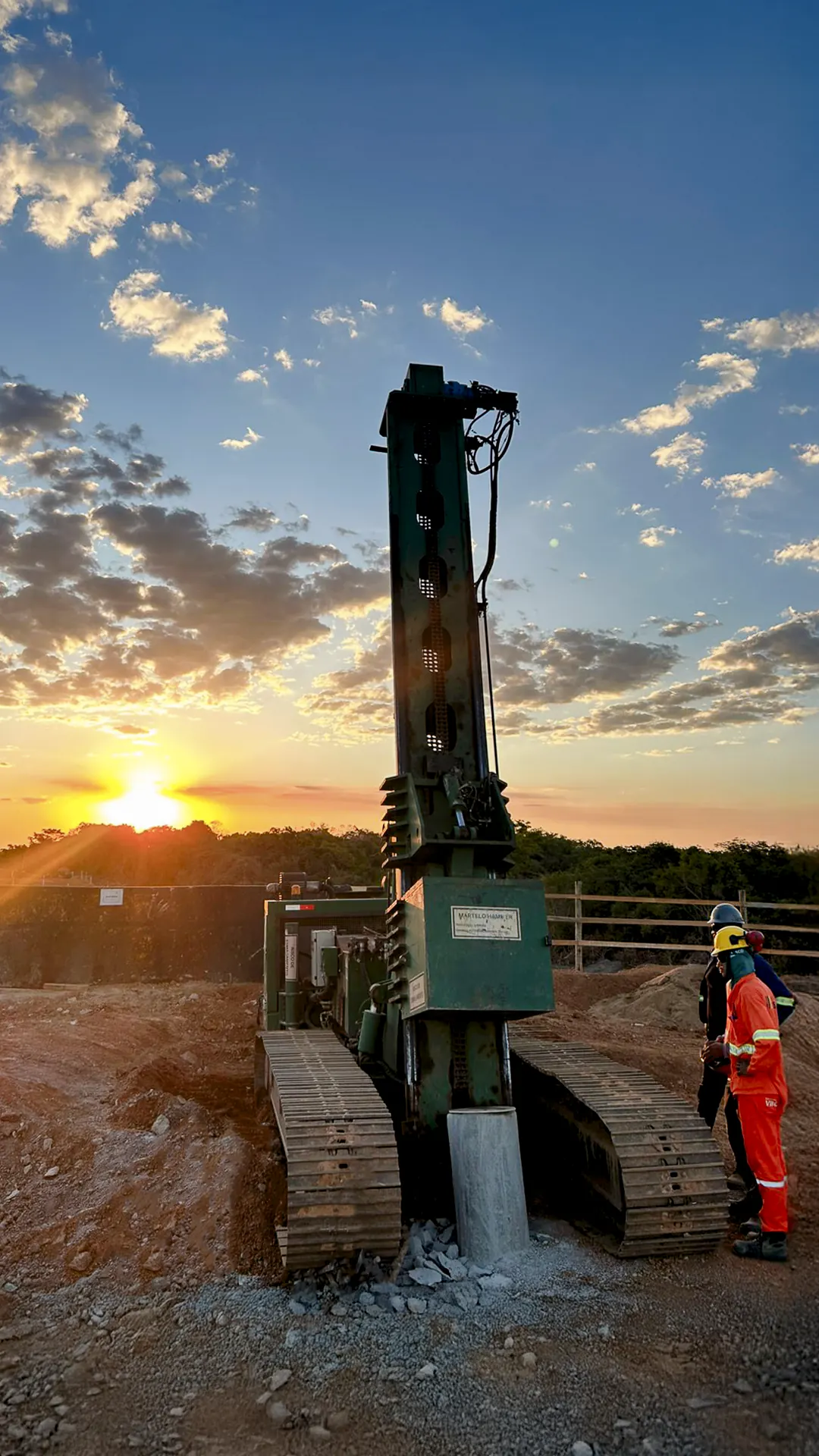
Advantages of the Hammer GT20:
- High productivity: First and foremost, the equipment is capable of testing up to 20 piles per day, making it ideal for large work fronts.
- Operational economy: Being autonomous, it not only eliminates the cost of crane rental but also dispenses with the need for rigging plans.
- Enhanced safety: Finally, remote operation keeps the technician at a safe distance and eliminates the risks of working at height.
4. Hydraulic hammer
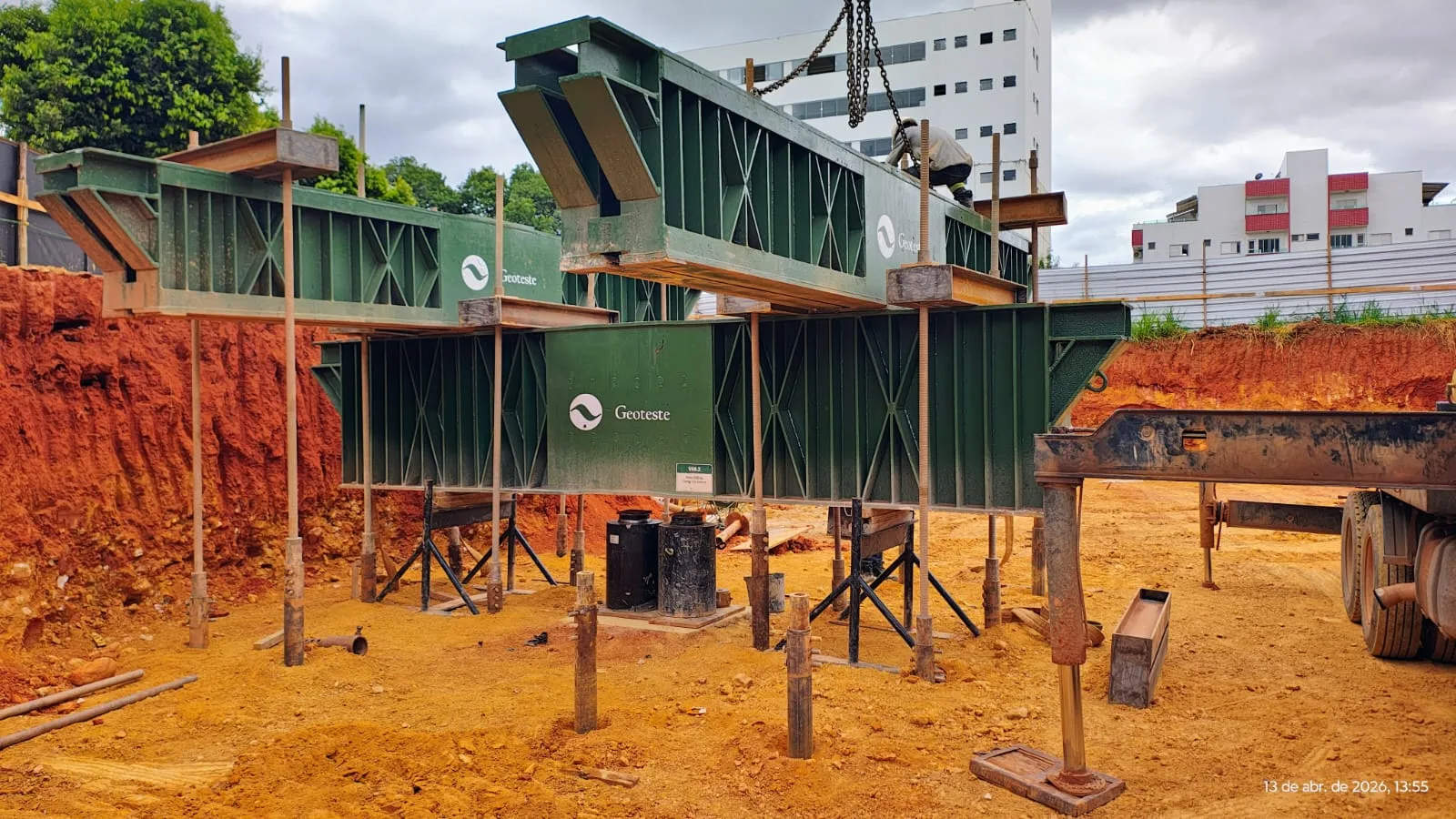
Regarding deep and large foundations, the hydraulic hammer is, certainly, the most robust equipment. It generates controlled impacts with very high energy. Consequently, its use is essential for testing large diameter and long piles, for example, in infrastructure projects and wind farms.
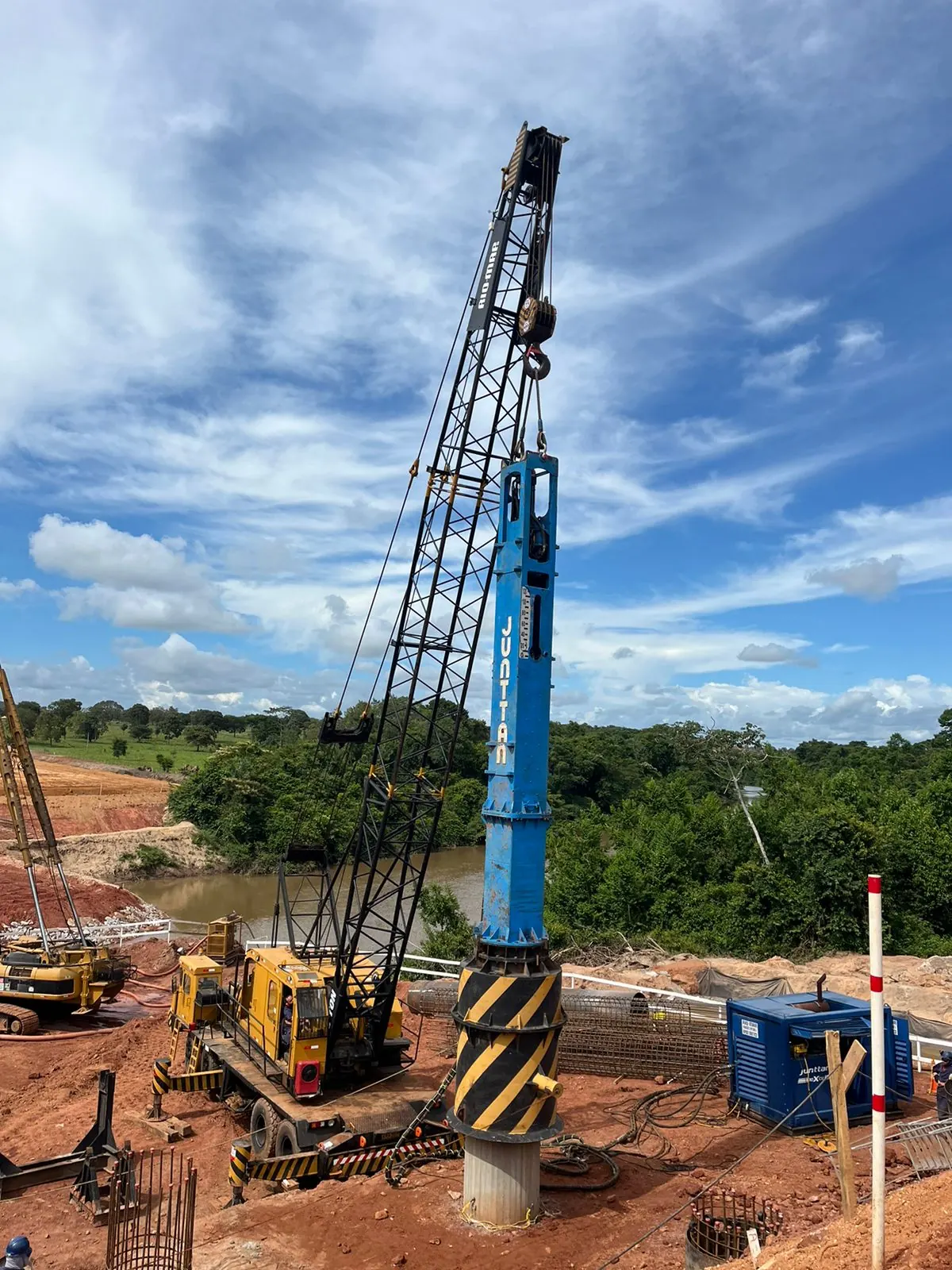
Characteristics of the hydraulic hammer:
- High impact energy: Ensures the mobilization of soil resistance in high-capacity piles.
- Superior precision: Thus, it increases the efficiency of blows and the reliability of PDA data.
- Contracting model: In this model, Geoteste provides the data acquisition system, while the client, in turn, provides the hammer.
Comparative table for PDA testing
To facilitate the decision, we summarize the main characteristics of each system in the table below.
| System | Ideal for | Main Advantage |
|---|---|---|
| Pile Driver | Projects with precast piles and equipment already on site. | Cost and mobilization time savings. |
| PDA Tower | Controlled tests requiring precision and a dedicated system. | Precision and reliability in impact. |
| Hammer GT20 | Projects with many piles, tight schedules, and a focus on safety. | High productivity, safety, and economy (no crane). |
| Hydraulic Hammer | Large foundations (high diameter and length). | High impact energy for high-capacity piles. |
Technical standards for PDA testing
Above all, it is important to note that the execution of PDA Testing is guided by technical standards, which ensure the standardization and reliability of the results. According to the Brazilian Association of Technical Standards (ABNT), the main reference in Brazil is:
- ABNT NBR 13208:2007, Piles, Dynamic load testing. You can consult it in the official ABNT Catalog.
Moreover, the test complies with the guidelines of NBR 6122.
Frequently asked questions about PDA Testing
What is PDA Testing (Pile Driving Analyzer)?
In other words, PDA Testing is a modern method to evaluate the load capacity of piles, analyzing the system's response to an impact to verify the foundation's safety.
Which impact system is the most productive for PDA?
Mainly Geoteste's Hammer GT20, which, being automated, can test up to 20 piles per day, thus optimizing the schedule of large projects.
Is it always necessary to rent a crane for PDA testing?
Not necessarily. In fact, systems like the PDA Tower require a crane. However, the Hammer GT20 eliminates this need and, consequently, the associated rental cost.
Which standard regulates PDA testing?
The main technical standard for PDA testing in Brazil is ABNT NBR 13208:2007, which specifically addresses dynamic load testing on piles.
The right choice for your foundation's safety
In summary, the selection of the impact system for PDA Testing is a critical decision, as it directly impacts the reliability, schedule, and budget of your project. Each method, therefore, has its ideal role.
Do not leave your foundation's safety to chance.
Precisely for this reason, Geoteste has the expertise and ideal equipment to meet the needs of your project.