Introduction to Pile Setup and Soil-Pile Interaction
In foundation engineering, the behavior of a pile immediately after driving or installation differs from its long-term performance. The term pile setup describes the gradual gain in load capacity that occurs in driven or injected piles over time. This phenomenon is fundamental for optimizing deep foundation designs, allowing for the understanding that the resistance measured immediately after driving does not represent the definitive limit of the structure.
Soil-pile interaction is a complex process involving physicochemical and mechanical reactions around the structural element. When a pile is driven into the ground, soil remolding occurs, generating high pore pressures and altering the effective stress state. As time passes, the surrounding soil recovers its initial properties, resulting in a significant increase in lateral and toe resistance.
Physical Mechanisms of Capacity Gain
The capacity gain known as pile setup is driven by different mechanisms, whose intensity varies according to the predominant soil type in the geotechnical profile. Pore pressure dissipation and soil aging are the main drivers of this resistance evolution.
Pore Pressure Dissipation
In saturated cohesive soils, such as soft clays, the introduction of a pile generates excess neutral pore pressure, temporarily reducing the soil's shear strength. Over days or weeks, this pressurized water drains, effective stresses increase, and consolidation occurs around the pile. This process recovers and often exceeds the original ground resistance, increasing the overall load capacity.
Aging and Redensification
In sandy soils, pile setup is associated with stress redistribution, intergranular creep, and secondary cementation along the interface between the pile shaft and the ground. This rearrangement of solid particles increases lateral friction, optimizing the foundation's performance under static and dynamic loads.
Methods for Assessing Pile Setup
The identification and quantification of capacity gain require rigorous geotechnical investigations and the execution of specific tests at different foundation ages. ABNT NBR 6122 guides the procedures applicable to foundation design and execution, establishing premises for structural safety.
To monitor the evolution of resistance, complementary methodologies are used that correlate the dynamic and static behavior of the pile. The table below summarizes the main technical approaches employed to evaluate pile setup:
| Geotechnical Test | Applicable Standard | Main Objective in Assessment |
|---|---|---|
| PDA Test (Dynamic Load Test) | ABNT NBR 13208 | Monitor the mobilization of resistance immediately after driving and in subsequent retests. |
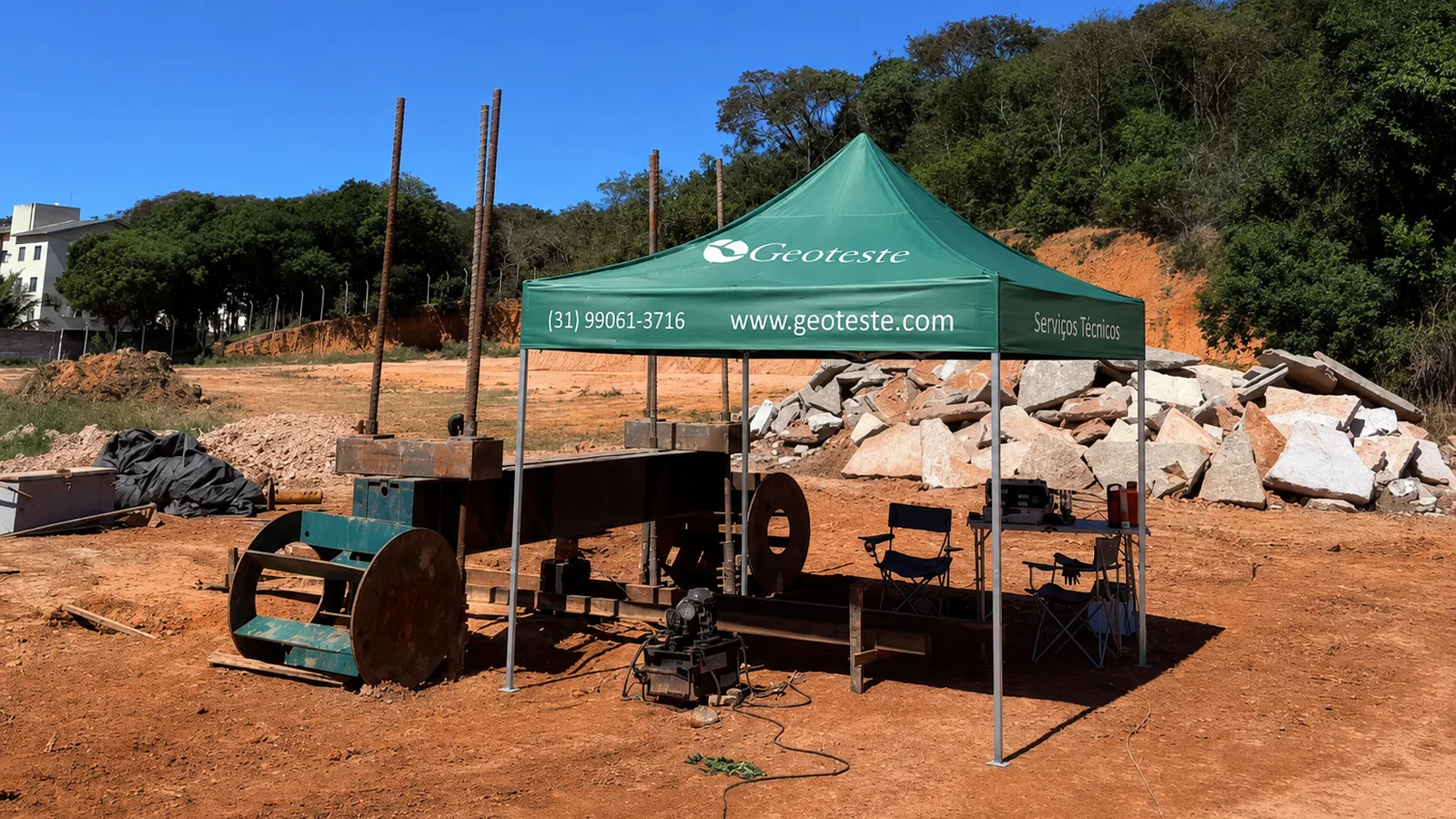
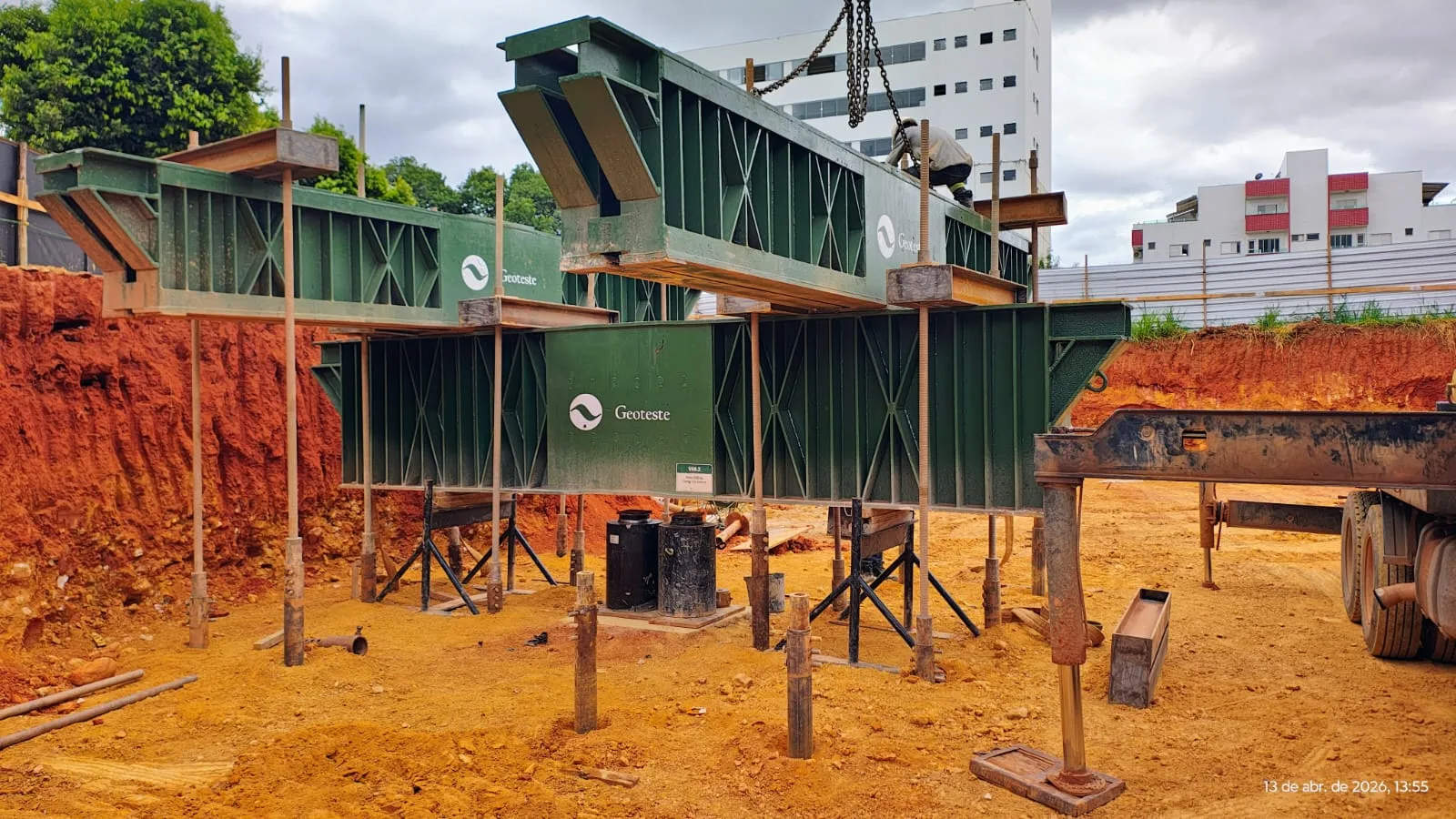
| Static Load Test (SLT) | ABNT NBR 16903:2020 | Obtain the actual load capacity at advanced ages after the end of the setup process. |
| Bidirectional Test | ABNT NBR 16903 | Separate toe and shaft resistance in large diameter piles. |
Importance of Pile Setup in Engineering Projects
Considering pile setup during the design phase brings significant economic and technical advantages for infrastructure. If the phenomenon is neglected, the foundation may be overdesigned based only on immediate capacity results obtained shortly after driving.
Among the main benefits of correctly measuring capacity gain are:
- Optimization of the length and quantity of piles specified in the design.
- Reduction of the overall infrastructure cost without compromising normative safety factors.
- Greater assertiveness in predicting settlements and behavior under service loads.
- Precise understanding of the actual foundation performance in complex construction sites.
How Geoteste Acts in Pile Setup Analysis
Geoteste supports construction companies, designers, and developers in the complete investigation of soil-pile interaction and the precise quantification of pile setup. Through high-tech tests such as the Static Load Test according to ABNT NBR 16903:2020, the dynamic PDA test governed by ABNT NBR 13208, and advanced dynamic and static load tests, our technical team monitors the evolution of resistance throughout the construction schedule, ensuring full compliance with the requirements of ABNT NBR 6122. Contact our specialists to plan the appropriate tests for your deep foundation project.