Slow or fast Static Load Test, PCE: which procedure to use?
Understand the differences between slow or fast static load tests, normative criteria, and applications for foundations. Check out Geoteste's article.

Por Maria T. Mota
Engenheira Civil Geotécnica
CREA/CONFEA 1417059923
Introduction to static loading in foundations
The static load test (PCE, from 'Prova de Carga Estática') represents one of the most traditional and fundamental tests for verifying the behavior of deep foundations under axial compressive forces. The execution of this test requires rigorous criteria to ensure the reliability of the obtained data, allowing comparison of design predictions with the actual response of the structural element and the ground. Among the existing methodological variations, the choice between slow loading and fast loading constitutes a crucial step for the success of geotechnical investigation.
The selection of the appropriate procedure depends not only on the preference of the executing team, but on factors such as soil type, permeability of the traversed layers, the presence of time-dependent phenomena, and the specific objectives of the foundation project. While one method prioritizes observing drained behavior and consolidation effects over time, the other seeks to quickly obtain load versus displacement curves for specific schedule demands and technological control.
Normative reference for the static load test
In the Brazilian normative scenario, the execution and interpretation of the static load test on deep foundations are governed by ABNT NBR 16903. This standard establishes the requirements and procedures for carrying out axial load tests on deep foundations, replacing previous historical editions and standardizing the requirements for displacement control, instrumentation, and load application.
Additionally, the general criteria related to the design and execution of foundations are covered in ABNT NBR 6122. It is fundamental to distinguish that the design standard defines global safety requirements, while the test standard details the operationalization of the loading. The correct adoption of such normative guidelines ensures that the obtained results reflect real performance conditions and provide adequate subsidies for foundation and structural designers.
Slow loading procedure in PCE
The slow loading method, often associated with long-duration load tests, is designed to allow total or partial dissipation of pore pressures generated during the application of load increments. In this procedure, each load stage is maintained for extended periods until the settlements stabilize, according to the displacement rate criteria defined in normative practice and the test project.
Among the main characteristics and applications of slow loading, the following stand out:
Detailed evaluation of behavior under drained conditions in clayey or silty soils.
Observation of time-associated phenomena, such as creep of the material or the soil-pile contact.
Obtaining more consolidated load versus displacement curves for permanent loads.
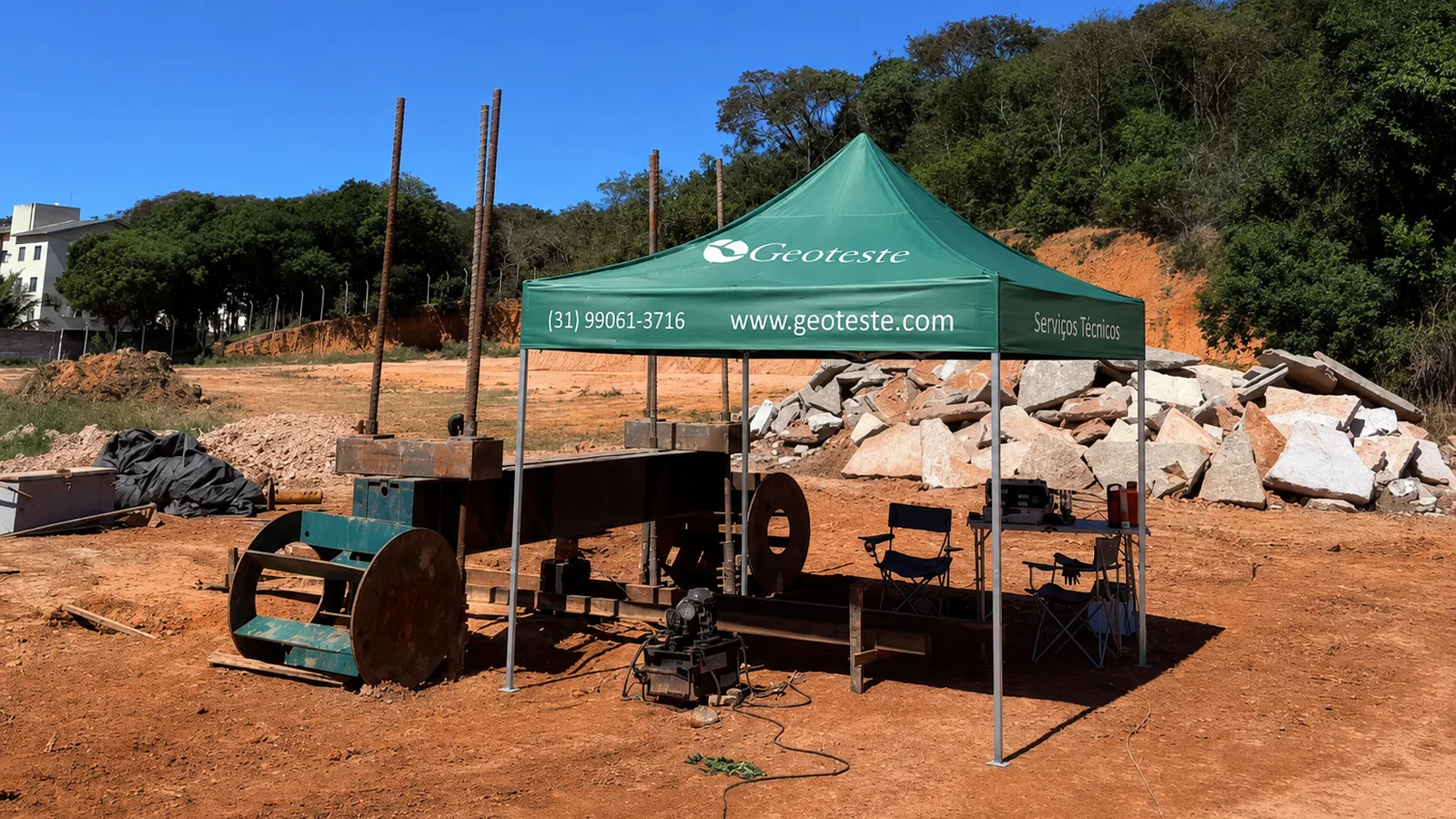
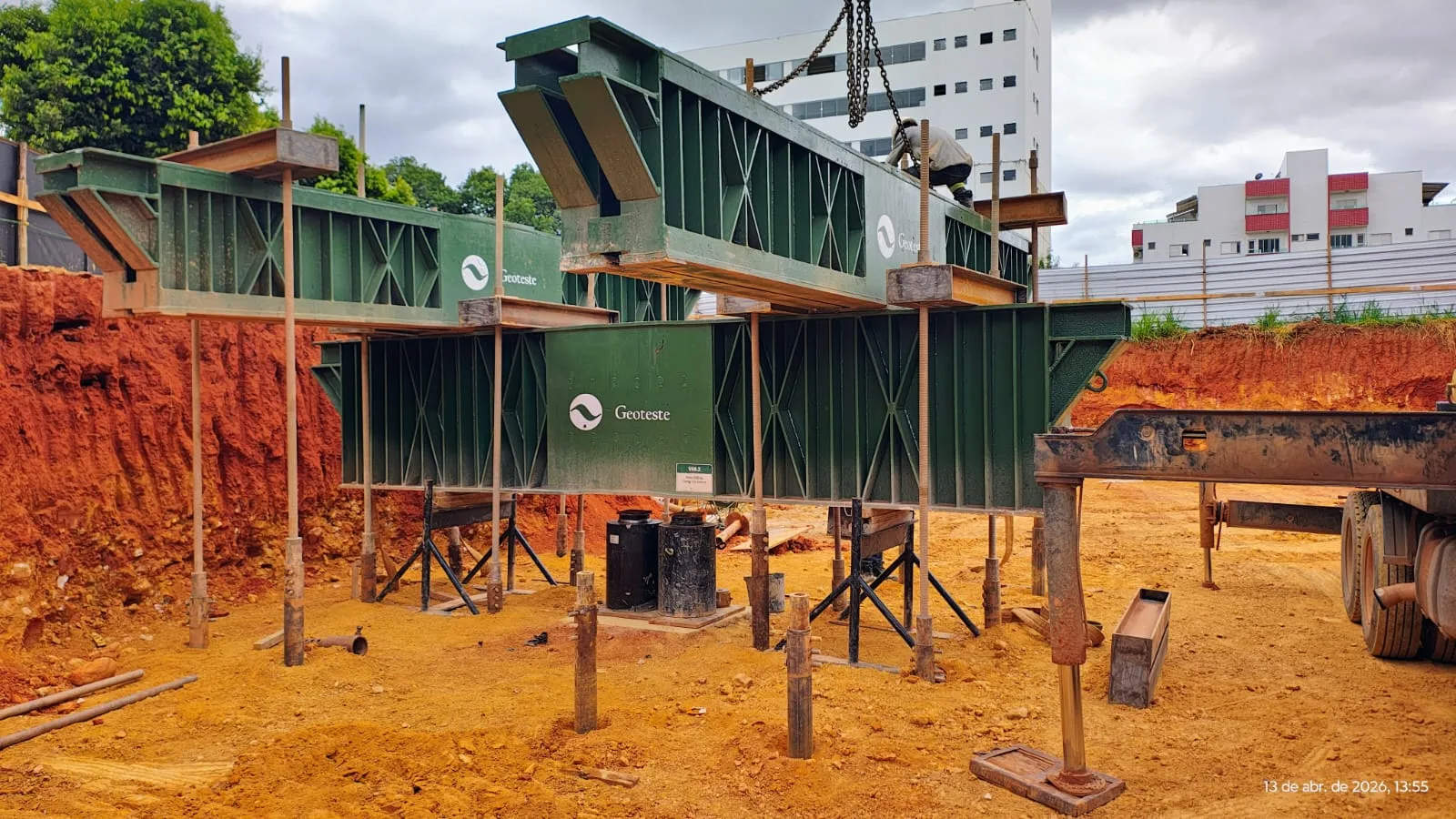
Need for high-stability reaction systems and instrumentation due to the long duration of the test.
The main advantage of this procedure lies in its ability to capture the geotechnical response under conditions close to effective stress equilibrium, being highly recommended in compressible soils where consolidation effects directly influence foundation performance.
Fast loading procedure in PCE
Fast loading constitutes an alternative procedure where load increments are applied at substantially shorter time intervals, without the requirement to wait for complete settlement stabilization at each stage. This method is commonly employed when the primary objective is to mobilize the ultimate resistance of the pile quickly, optimizing the construction schedule without compromising the safety of interpretation.
The central aspects of fast loading involve:
Standardized and short-duration load application intervals between successive plateaus.
Rapid mobilization of the lateral and toe resistance of the foundation element.
Reduced exposure of the reaction system to weather and prolonged creep deformations.
Need for hydraulic and automated reading systems capable of recording data with high frequency.
Despite the operational agility, the interpretation of results obtained by fast loading requires caution, especially in saturated fine soils where induced pore pressures do not dissipate during the test. In such cases, the displacement curve may reflect an undrained response, requiring complementary correlations and theoretical analyses.
Comparison between procedures and selection criteria
The decision to use the slow or fast procedure in a static load test depends on a careful analysis of local geotechnical conditions and the purpose of the test. The table below summarizes the main comparative aspects between the two operational approaches.
Comparison Criterion | Slow Loading | Fast Loading |
|---|---|---|
Test Duration | Long, can extend for several days | Short, usually completed in a few hours |
Pore Pressure Dissipation | Allows dissipation during plateaus | Predominantly undrained condition in stages |
Main Applications | Compressible soils and long-term settlement analysis | Projects with restricted schedules and granular soils |
System Stability | Requires prolonged monitoring of the reaction system | Shorter exposure time under maximum load |
It should be noted that the result of a static load test provides the specific behavior of the tested element under the applied load. The extrapolation of this data to the entire pile group or to other foundations of the structure requires justified technical substantiation, considering the variability of the subsoil and the execution methods employed.
Limitations and interpretation considerations
No isolated test procedure exhausts all complexities of geotechnical behavior. Both slow and fast loading have inherent limitations that must be considered by the design engineer. Critical points include the capacity of the reaction system, site dimensional restrictions, and the correlation between the applied load and the geotechnical bearing capacity.
Furthermore, time acts as a fundamental variable in foundation behavior. Phenomena such as the temporal gain in resistance after installation, known in the literature as pile setup, can significantly alter the foundation's response between the date of driving or casting and the date of the load test. The designer must assess whether the tested pile represents the actual effective stress state of the structure in service.
Geoteste's role in static load tests
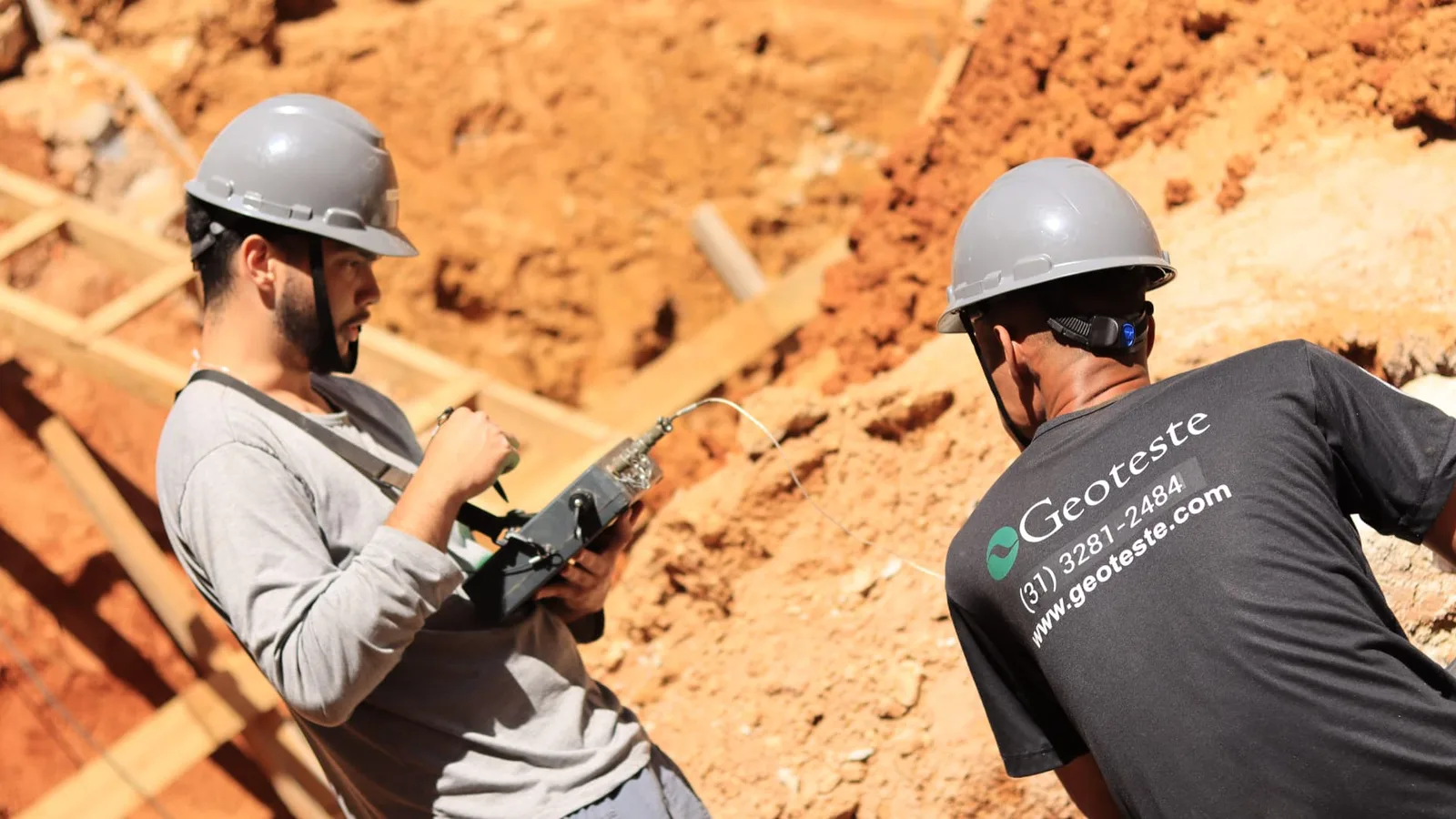
The execution of static load tests, whether by the slow or fast method, requires technical rigor, calibrated equipment, and high-precision instrumentation to ensure the reliability of the data recorded in the field. Geoteste works with highly specialized teams in carrying out static and dynamic load tests on deep foundations, strictly following the guidelines of ABNT NBR 16903 and ABNT NBR 6122.
Our engineering team advises construction companies and designers, from the conception of the test plan to the advanced interpretation of load versus displacement curves, identifying resistance limits and deformation performance of foundations in different geotechnical scenarios. Contact Geoteste's technical team to discuss the most suitable procedure for your next project.