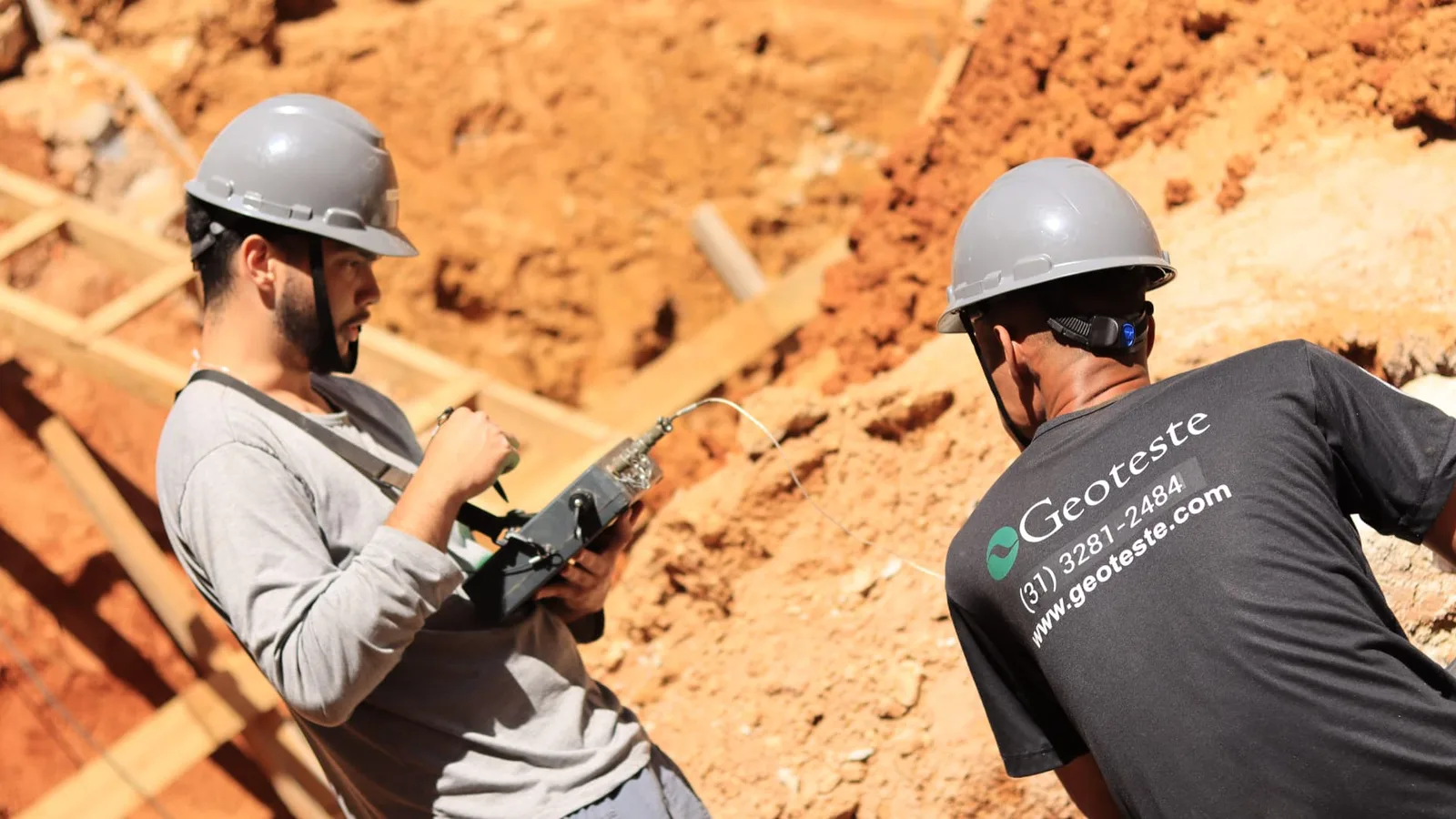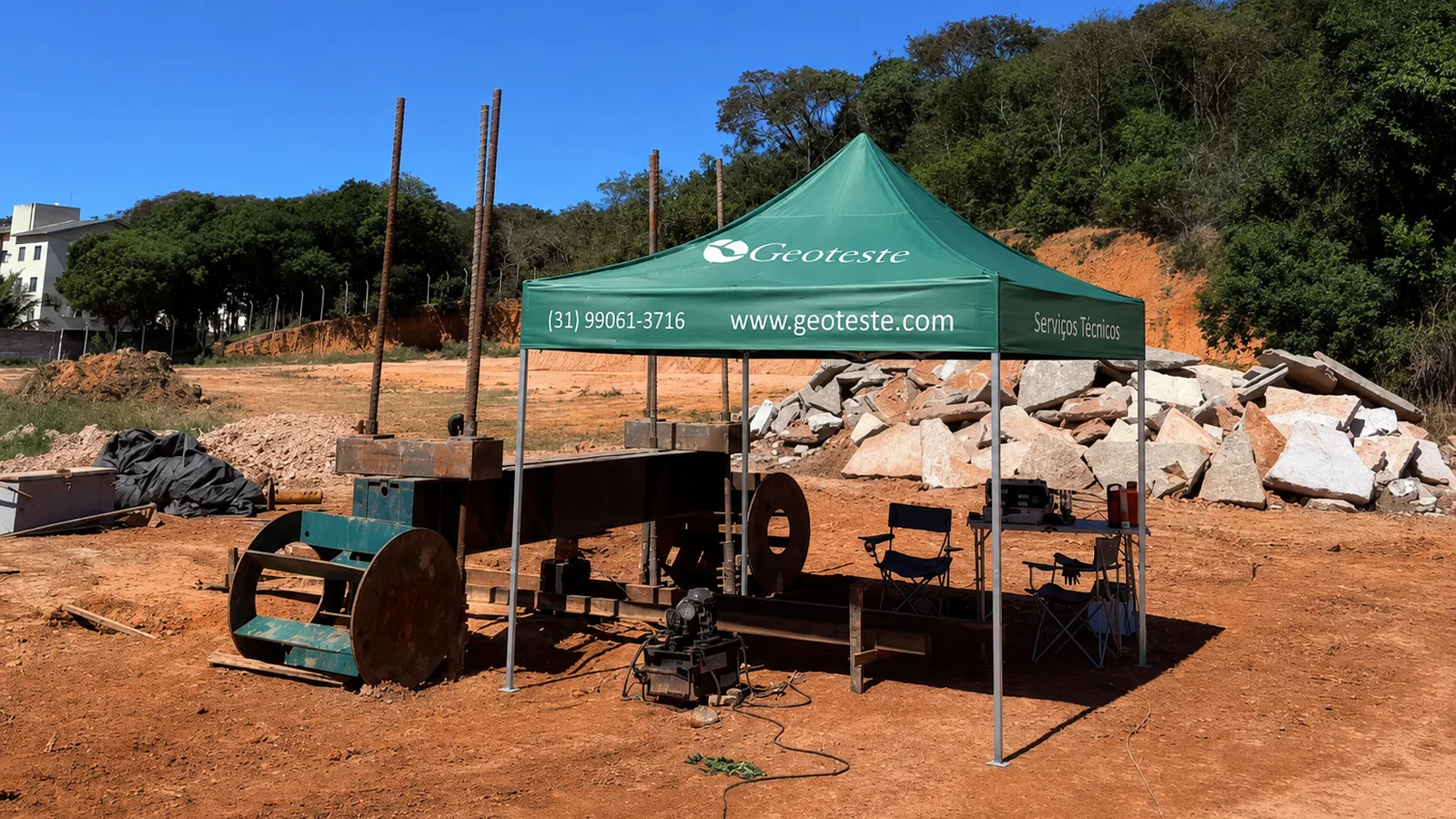
The static load test (SLT) seeks to reproduce the application of the actual loading of a structure before it is completed, allowing for the evaluation of the safety that the foundation will provide in relation to its proposed loading.
The static load test consists of applying known loads on a test pile, waiting until settlement stabilizes. Load increments (also known as load stages) are performed, and simultaneously the respective records of settlements collected on the pile are made, which may originate from shaft shortening or pile toe settlement. Loading continues until the programmed maximum load or until the system fails, and subsequently, planned unloading is performed. If a settlement occurs that qualifies as an apparent failure, the loading may be interrupted, and the test concluded.
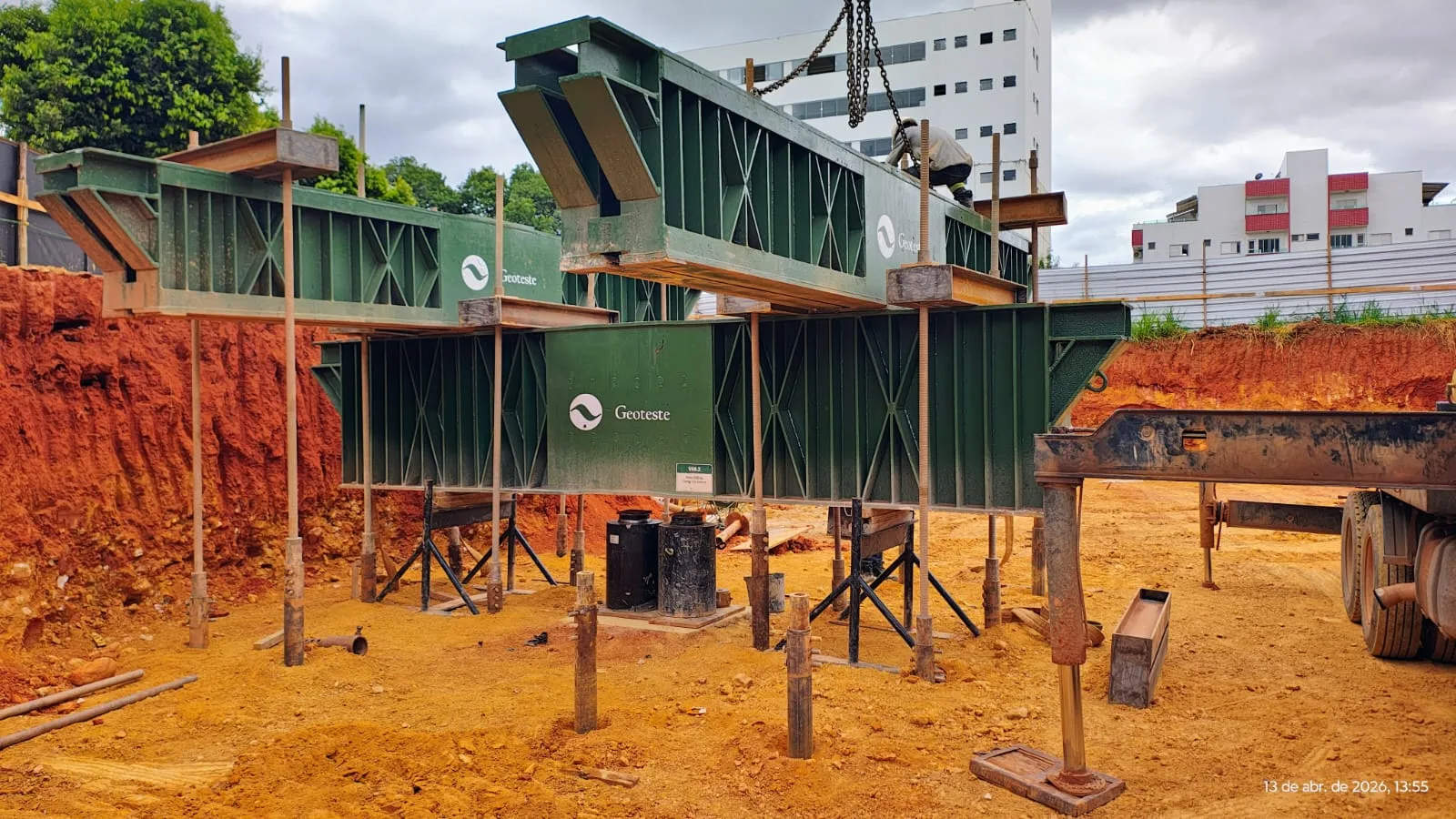
“In this type of test, the foundation element is subjected to full-scale loads, generally applied by a hydraulic cylinder that reacts against a system consisting of metallic beams and reaction piles and/or tie rods.”
Information and Data
The analysis of data obtained in the field provides important information, such as:
Load-displacement curve;
- Bearing capacity of the piles;
- Settlement associated with the applied load;
- Safety factor of the foundation piles.
It is important that the assembly of this structure ensures the application of the load in the desired direction and sense. The test time varies mainly due to the designer's criterion according to the standard, and can be slow, mixed, or rapid.
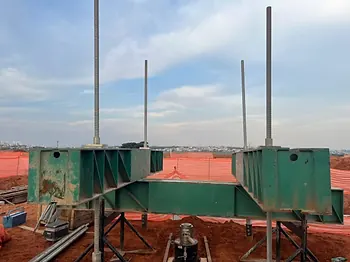
Pile Cap
Before the start of the SLT (Static Load Test), a pile cap is constructed by the client, which is a concrete structure designed to support and uniformly distribute loads during the test. This cap serves as a stable and solid base to ensure that the applied forces are not altered or diverted, providing precise and reliable results for the test.
Furthermore, the pile cap must be constructed according to rigorous technical specifications, ensuring its structural integrity and its ability to support the designed loads.
Measurement Sensors
During the loading test, displacement measurement of the pile is monitored over time due to the load increment applied in different stages.
Currently, two types of sensors are used for monitoring:
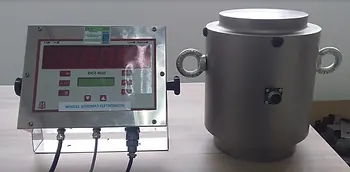
Load cells: measure the load exerted by the hydraulic jack, which is installed between the hydraulic jack and the pile. One or more cells can be used, depending on the desired maximum loading.
Dial gauges: measure displacement during load application. They are symmetrically positioned at four points on the top of the pile cap.
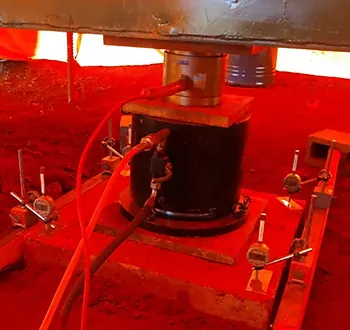
These sensors have replaced manometers due to the precision of the equipment, as well as the possibility of real-time visualization and data storage when used in conjunction with a measurement system.
Reaction System using Recoverable Helical Piles
The reaction system used by GEOTESTE for performing the static load test employs steel helical piles, which act as elements resisting tensile forces. This system consists of helical piles driven into the soil, functioning as recoverable anchorages. The helical piles are connected to tie rods specially designed to support the stresses generated by load application, carried out through a hydraulic jack on metallic profiles, as shown in the previous photos.
The steel helical piles are installed in the soil in a configuration that ensures stability and the capacity to support the imposed loads during the test. Their main function is to provide an effective reaction against the generated tensile forces, keeping the system balanced and ensuring the precision of the test results. Because they are recoverable, the helical piles can be removed and reused in other tests or projects, providing efficiency and economy in the testing process.
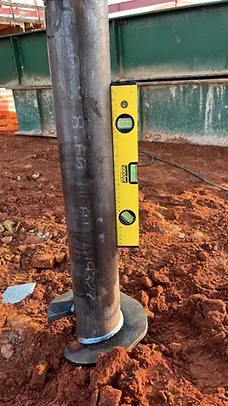
This reaction system is designed to ensure that the forces applied during the test are adequately distributed and that the test structure remains stable, allowing for an accurate assessment of load and resistance properties.
The use of recoverable helical piles in the reaction system for the Static Load Test (SLT) generates significant savings compared to the traditional method, which requires permanent foundation piles. This system offers substantial economic advantages in several ways:
- Reduced Material Cost: Recoverable helical piles are more economical in terms of materials when compared to traditional foundation piles. Instead of using large volumes of concrete and steel for permanent piles, which are often lost, helical piles are manufactured with less material and can be reused in different projects, providing the client with economy and time savings in the execution of reactions.
- Labor Cost Savings: The installation of helical piles is generally faster and less complex than the installation of foundation piles. This reduces the time required to complete the installation, decreasing costs associated with labor and working time.
- Waste Elimination: Since helical piles are recoverable, there is no need to demolish concrete or cut steel bars from permanent piles after the test. This avoids the costs and environmental impact associated with the removal and disposal of materials, contributing to a more sustainable and economical process.
Conclusion on the static load test with helical piles
The Static Load Test (SLT) is the most traditional method for evaluating the safety and bearing capacity of foundations before construction completion. Through the application of known loads and the measurement of settlements on the test pile, it is possible to ensure that the foundation will respond adequately to the designed loads. Precise execution in accordance with standards, such as NBR 16.903/2020, ensures the integrity and reliability of the obtained results.
Therefore, the reaction system based on steel helical piles represents a significant innovation in static load testing methodology. It provides considerable economic advantages compared to traditional methods, in addition to offering a sustainable and reusable solution; in other words, this method aligns economic efficiency with environmental concern.