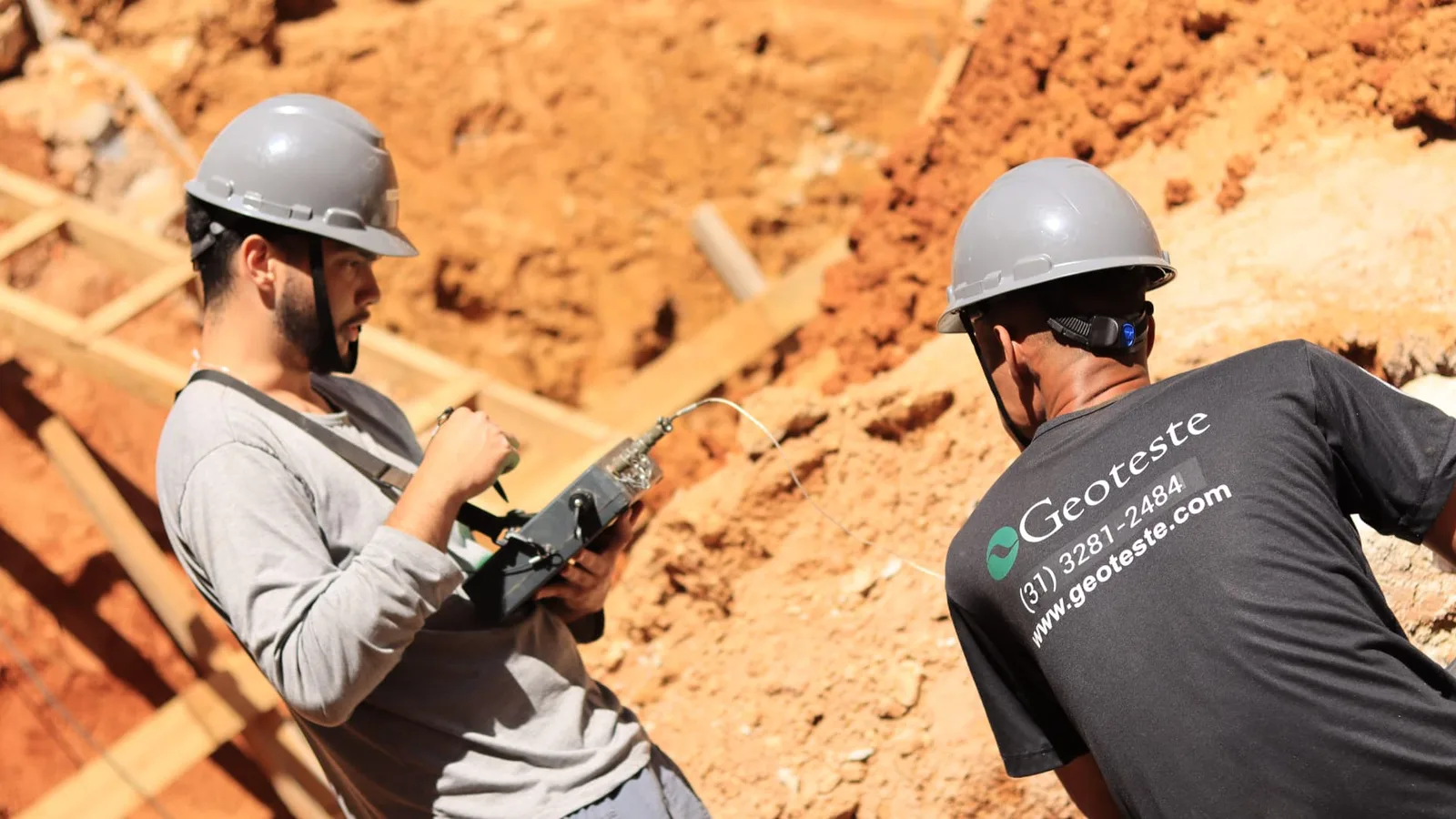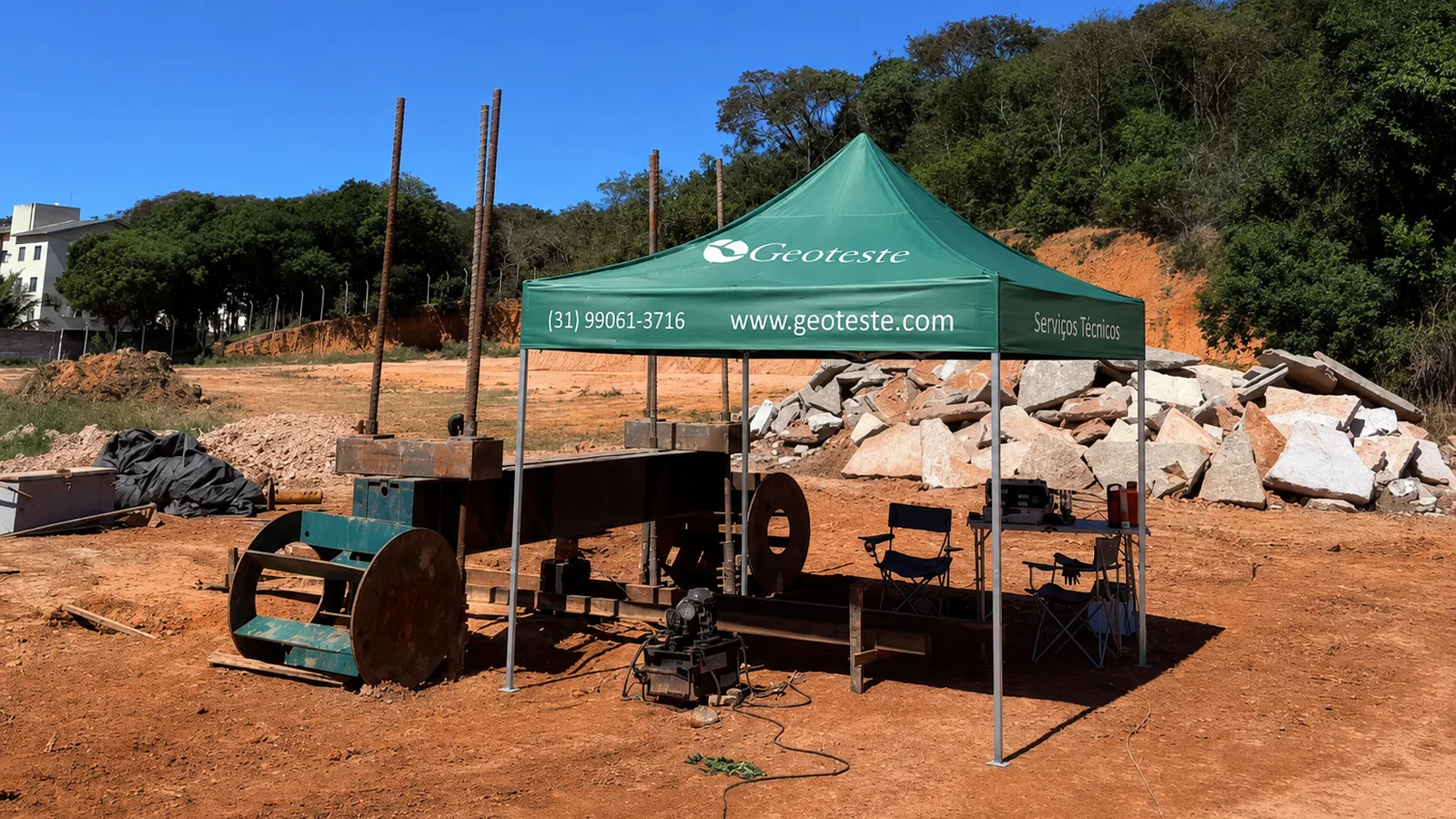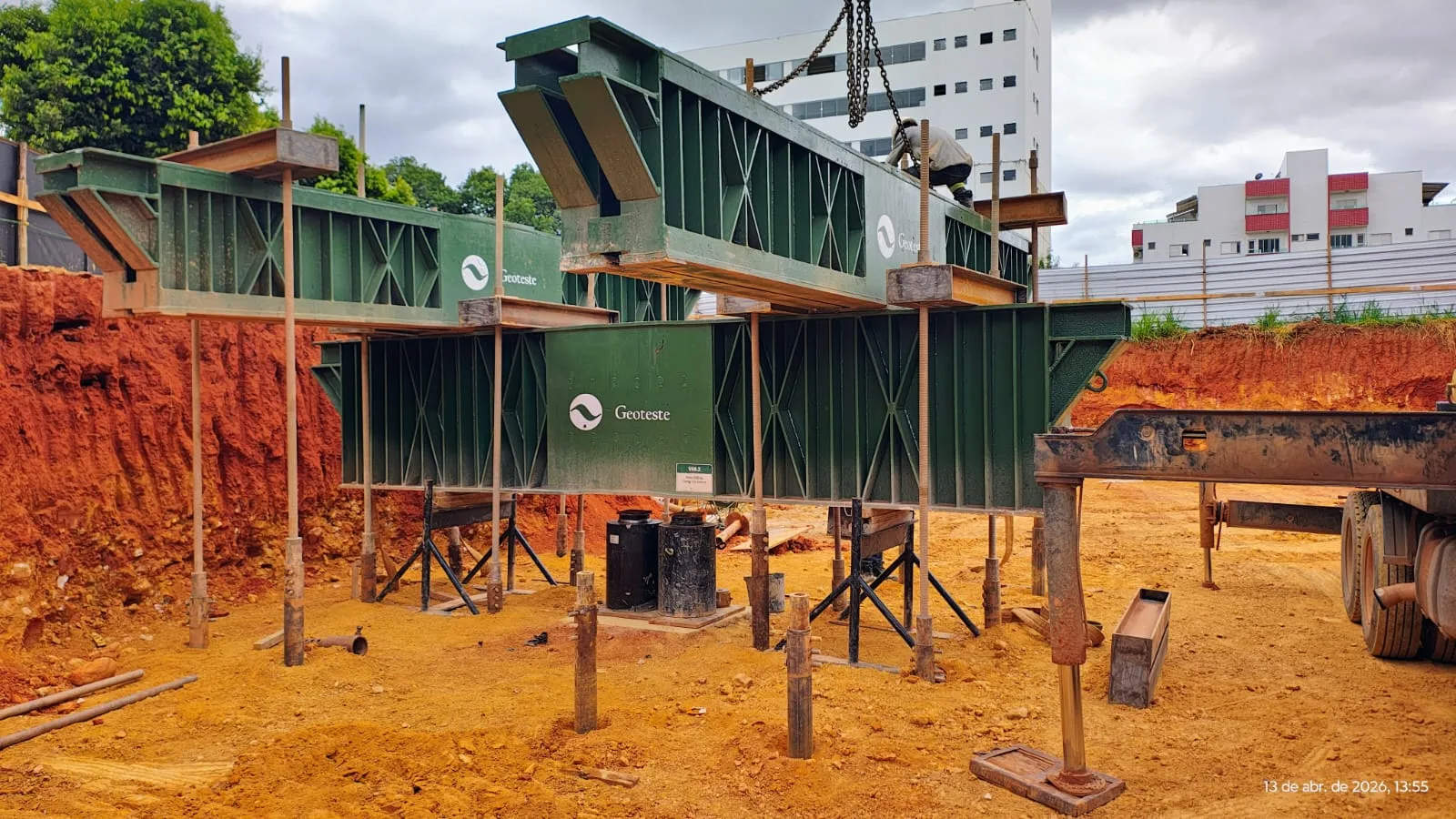
“Static load testing is a fundamental method for evaluating the bearing capacity of piles in deep foundation projects. In this article, we will explore how helical recoverable reactions are revolutionizing this practice, offering an efficient and reliable solution for engineers and designers.”
What is Static Load Testing?
Static load testing is a test performed to determine the bearing capacity of a pile, simulating the load conditions the pile will face during its service life. This test is crucial to ensure the safety and stability of structures, especially in large-scale projects or in soils with challenging characteristics. It follows Brazilian standard NBR
Helical recoverable reactions: An innovative solution
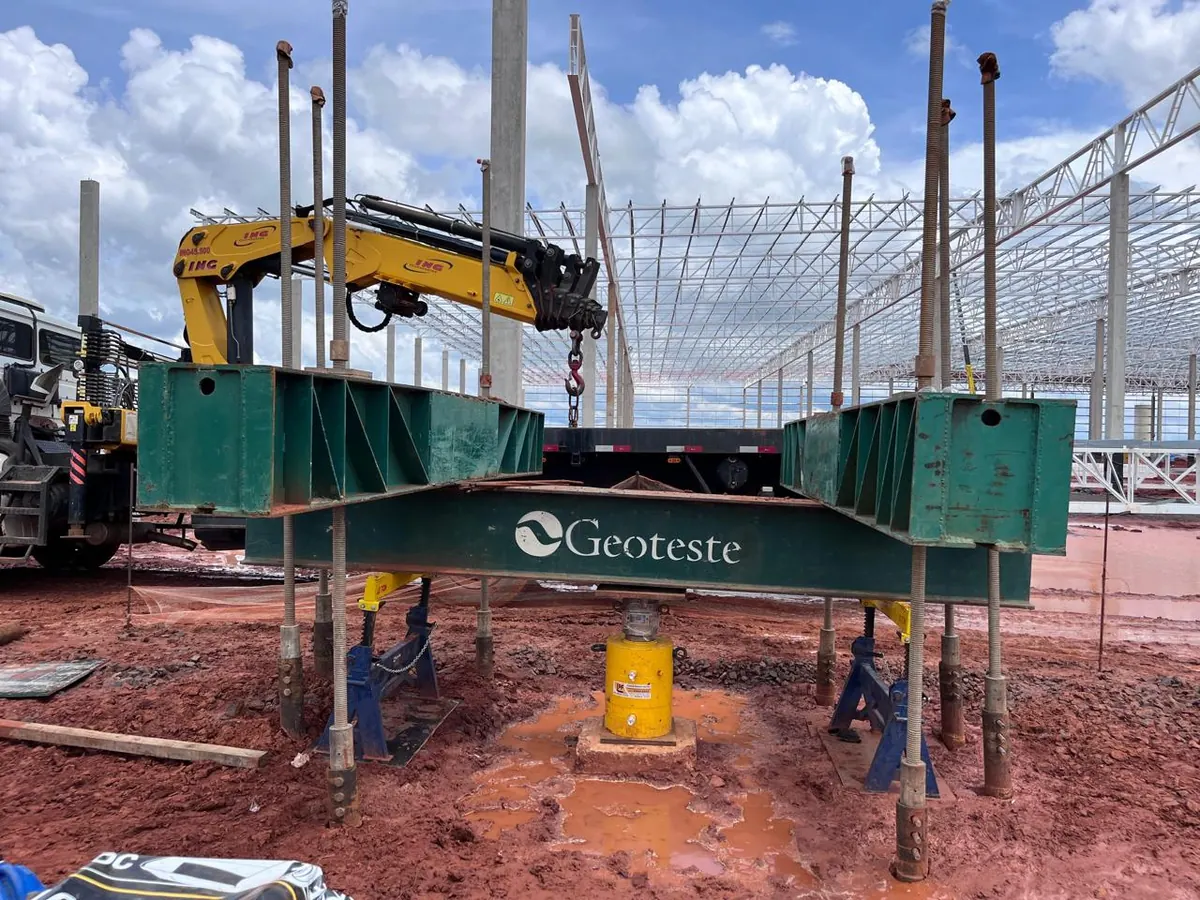
Helical recoverable reactions are an advanced technology that allows static load tests to be performed more efficiently and economically. These reactions are composed of helical elements that are installed in the soil and used as reaction points for applying load to the pile.
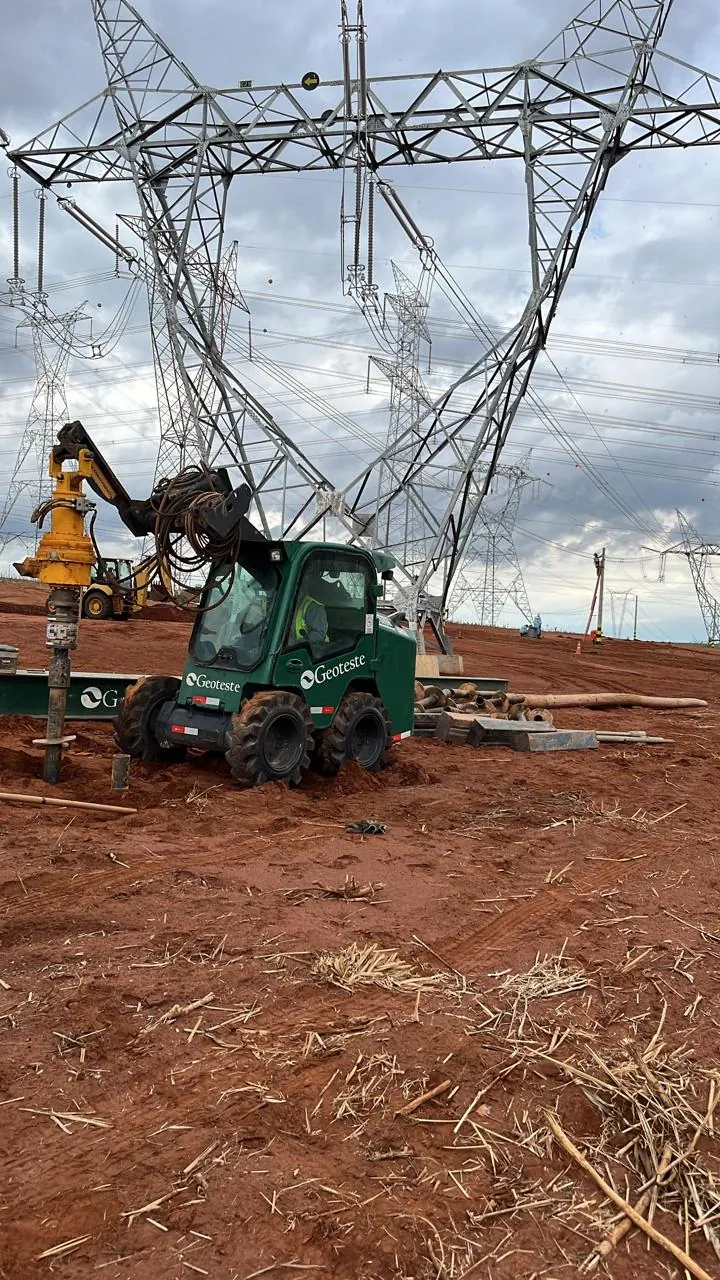
For this setup, equipment coupled to a torque motor and an adapter for fitting these helices are necessary.
The helical elements can be coupled until they reach the lengths specified in the design. The number of reactions and the driving depth of these helices depend on the test load and the soil at the construction site. With these factors, Geoteste determines the expected quantities of reactions and depths. This factor is essential for a correct setup of the reaction system.
Advantages of using helical recoverable reactions
1. Cost and Time Reduction: By using recoverable reactions, it is possible to significantly reduce the cost and time required for static load testing, as it eliminates the need for permanent reaction structures.
2. Flexibility and Adaptability: Helical reactions can be easily installed in a variety of soil conditions, making them a versatile solution for different types of projects.
3. Precision and Reliability: Helical technology offers a precise and reliable way to apply and measure loads, ensuring high-quality results.
Practical application
The application of helical recoverable reactions in static load tests involves several steps:
1. Installation of Helical Reactions: Reactions are installed in the soil near the pile to be tested, ensuring they are sufficiently anchored to support the applied loads.
2. Load Application: Using a load application system, such as hydraulic jacks, the load is applied to the pile, with the helical reactions providing the necessary support point.
3. Measurement and Analysis: During the test, precise measurements of the pile displacement and applied load are taken, allowing for detailed analysis of the pile's bearing capacity.
Conclusion
The use of helical recoverable reactions in static load tests represents a significant advance in foundation engineering. With its ability to offer precise and reliable results, reduce costs and execution time, and adapt to diverse soil conditions, this technology is becoming a popular choice among professionals in the field. By opting for this innovative solution, engineers and designers can ensure the safety and stability of their structures with greater efficiency.

If you have any questions, please feel free to contact us and clarify your doubts with our specialists.
Do you have any questions about the necessity of these tests in your construction project, contact us!