How to set up a technological control plan for deep foundations?
Learn how to structure a technological control plan for deep foundations with PIT, PDA, and PCE tests according to NBR 6122. Talk to Geoteste.

Por Diogo Bechler
Engenheiro Civil Geotécnico
CREA/CONFEA 1416378065
Introduction to the technological control of deep foundations
Deep foundation design requires rigorous validations to ensure the safety and stability of any civil construction project. The development of a technological control plan for deep foundations is the instrument that defines which verifications, tests, and procedures will be executed throughout the construction. This document anticipates risks, validates design hypotheses, and ensures executive conformity regarding predicted loads.
Deep foundations, such as bored piles, continuous flight auger piles, metallic piles, and precast concrete piles, operate in direct contact with the soil and often in complex geotechnical conditions. Therefore, the technological control plan must be structured already in the planning phase, integrating design guidelines with the current regulatory requirements in Brazil.
Guidelines of NBR 6122 and the control project
The fundamental technical standard governing the sector is NBR 6122:2022, which deals with the design and execution of foundations. It establishes minimum criteria for pile acceptance and defines the need to prove load capacity and structural integrity. The technological control plan for deep foundations must originate from a careful reading of this standard, combined with the SPT (Standard Penetration Test) report and the structural and geotechnical design notes.
Defining the scope of the plan requires classifying piles by diameter, length, and execution method. Cast-in-situ elements and driven piles have distinct behaviors and, consequently, different methodological demands on the construction site. A clear definition of responsibilities and test frequency avoids delays and rework.
Testing methodologies applied to the plan
A robust plan includes both integrity assessment and geotechnical load capacity verification. The choice of methods depends on the size of the structure, the risks involved, and the variability of the geological profile.
Integrity tests: PIT
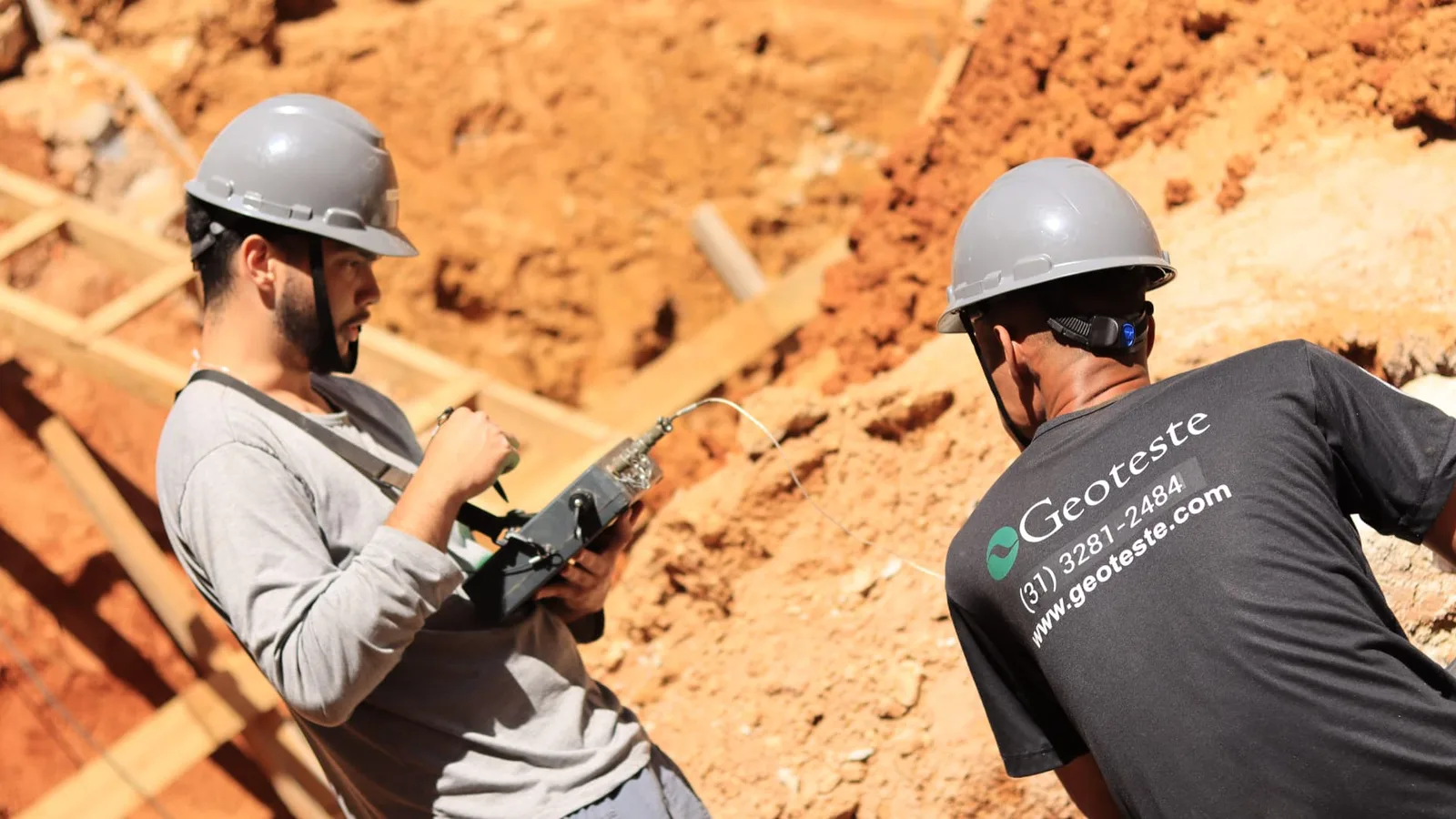
The Pile Integrity Test (PIT), governed by ASTM D5882, is the most employed non-destructive method to detect discontinuities, necking, soil inclusions, or ruptures along the pile shaft. The PIT should be included in the technological control plan for deep foundations as a routine for cast-in-situ piles, allowing for quick screening of elements before the pile cap release.
High strain dynamic tests: PDA
The Pile Driving Analyzer (PDA) high strain dynamic test, standardized by NBR 13208 and ASTM D4945, measures the pile's load capacity, in addition to assessing integrity and energy transfer during impact. In the control plan, PDA stands out for its agility, allowing a significant number of piles to be tested per day, especially in driven piles or continuous flight auger piles monitored by cell-z or specific instrumentation.
Static Load Tests: PCE
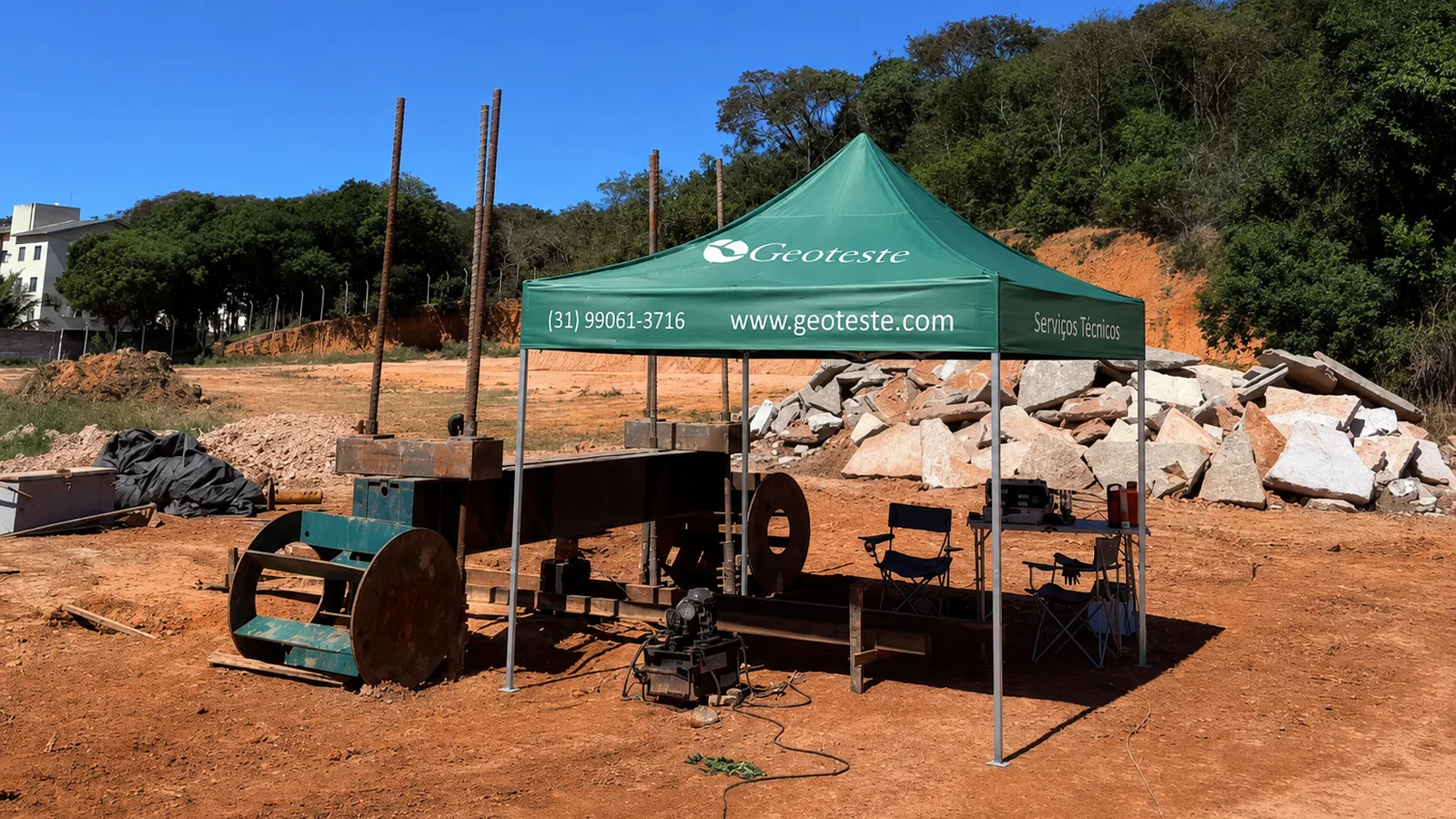
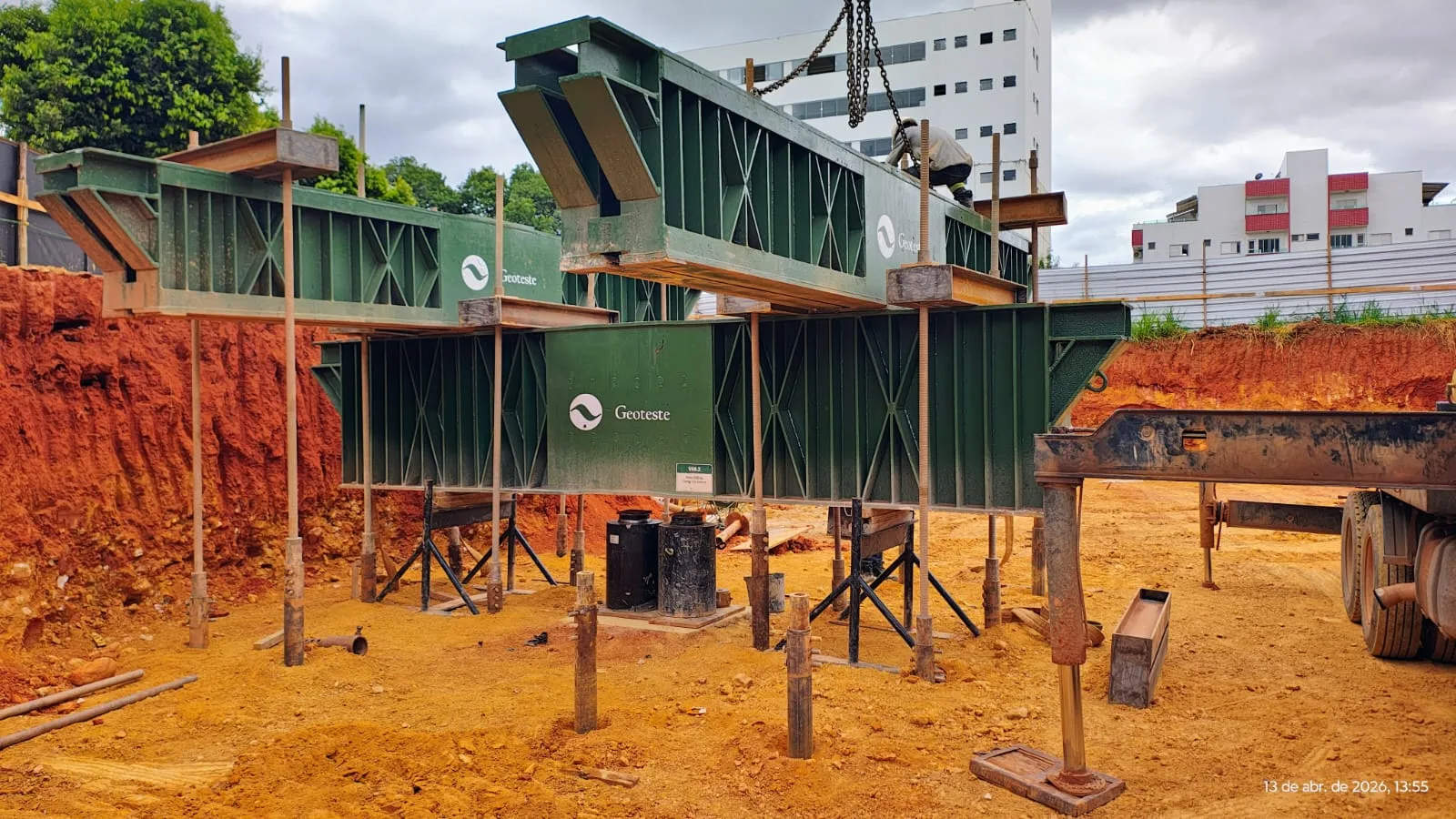
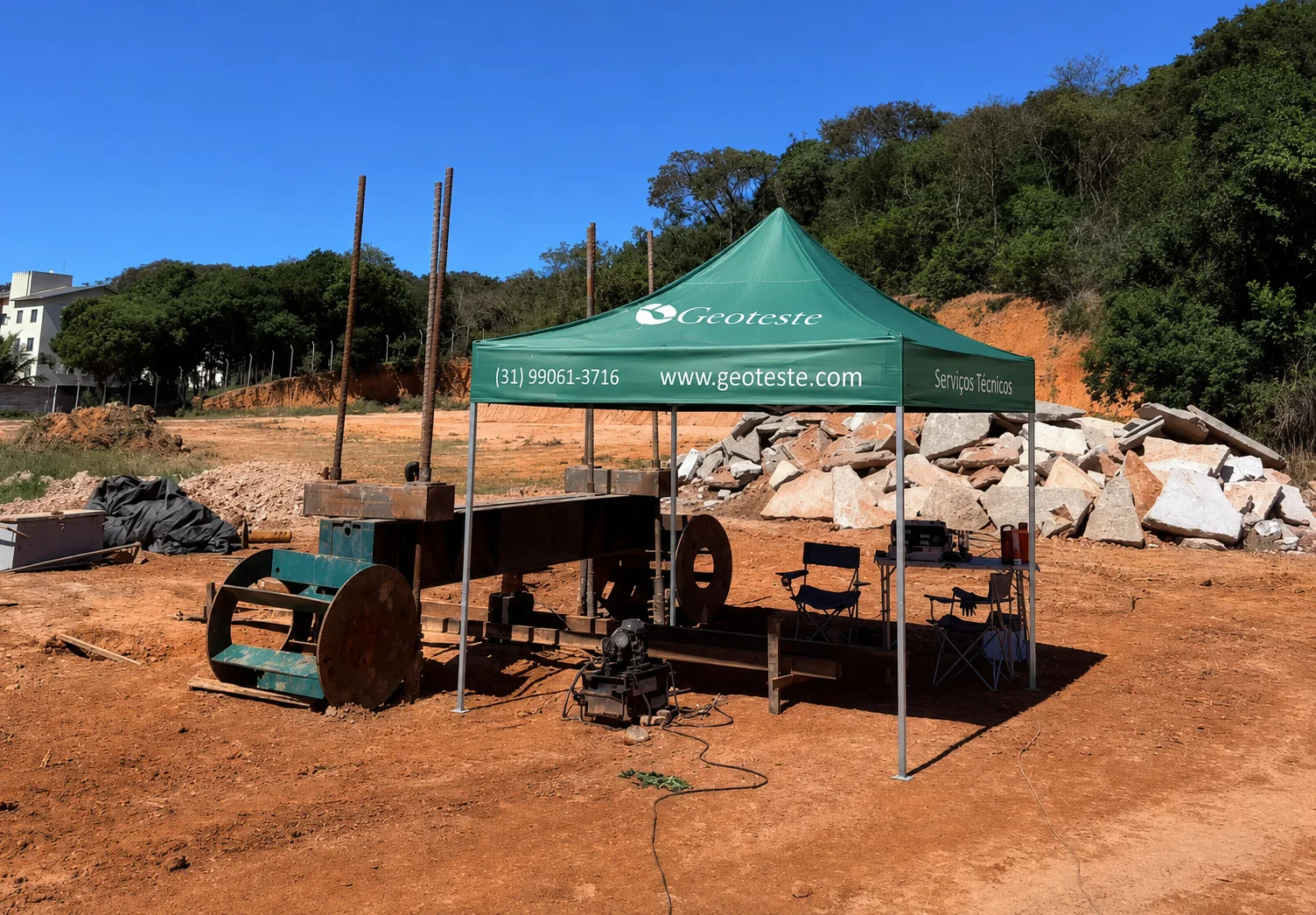
The Static Load Test (PCE), standardized by ABNT NBR 16903:2020, which replaced the old NBR 12131, is the reference method for determining the ultimate load capacity of a deep foundation. Although it requires greater mobilization of time and logistical resources, PCE is indispensable in large-scale works, foundations with high loads, or in soils where geotechnical parameters present high uncertainty. The control plan must include the advance location of the reaction system, whether by reaction piles or a reaction beam.
Steps for structuring the document
The elaboration of the technological control plan for deep foundations follows a logical sequence that ensures adequate technical and financial coverage for the project. The essential steps include:
Identification of foundation types and acting loads in the structural design.
Mapping of geotechnical uncertainties based on SPT soundings and special soil tests.
Definition of the percentage of piles to be tested with PIT, according to criticality and diameter.
Selection of piles that will undergo PDA for dynamic behavior calibration.
Scheduling of positions and design loads for eventual static load tests (PCE).
Establishment of acceptability criteria and action plans for non-conforming results.
Management of non-conformities and acceptability criteria
No technological control plan for deep foundations is complete without defining what happens when a test indicates an anomaly. The document must clearly stipulate acceptance criteria, such as maximum allowable displacements in PCE, energy and impedance limits in PDA, or anomalous reflections in PIT. Should a rejection occur, the plan must provide decision flowcharts that may include complementary tests, structural reinforcement design, or the driving of additional piles.
Specialized technical support in foundation technological control
Geoteste supports engineers, construction companies, and designers in the conception and execution of technological control plans for deep foundations, offering a complete portfolio that includes static load tests (PCE), PDA, PIT, plate load tests, and advanced geotechnical instrumentation. Our engineers operate in compliance with ABNT NBR 6122:2019, with Amendment 1:2022, ABNT NBR 13208, ABNT NBR 16903:2020 for static load tests on deep foundations, and ABNT NBR 6489 for direct load tests on soil, ensuring safety, reliability, and traceability at all stages of your foundation. Contact Geoteste's technical team to structure the ideal testing plan for your project.