Introduction to limit behavior in foundations
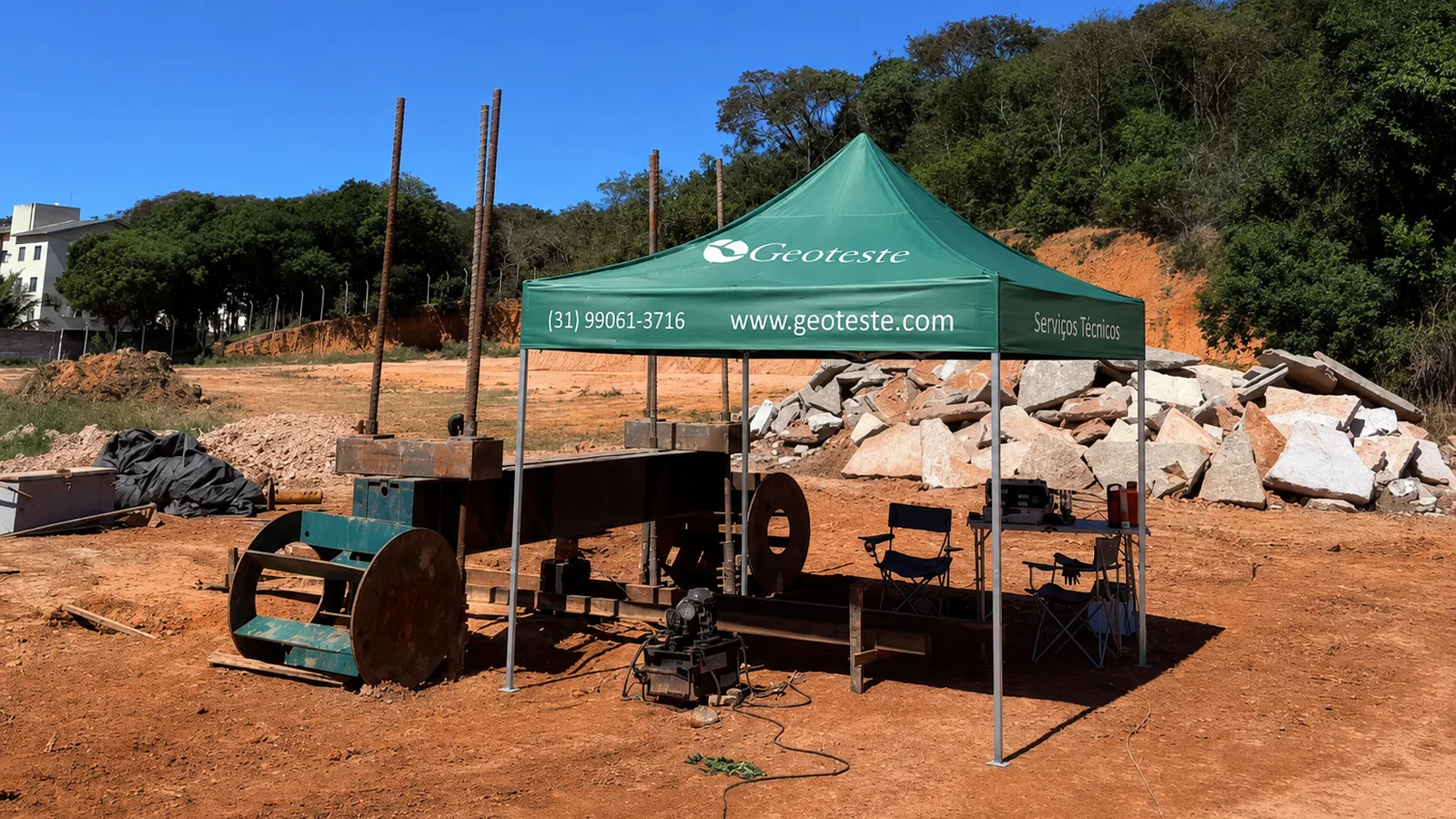
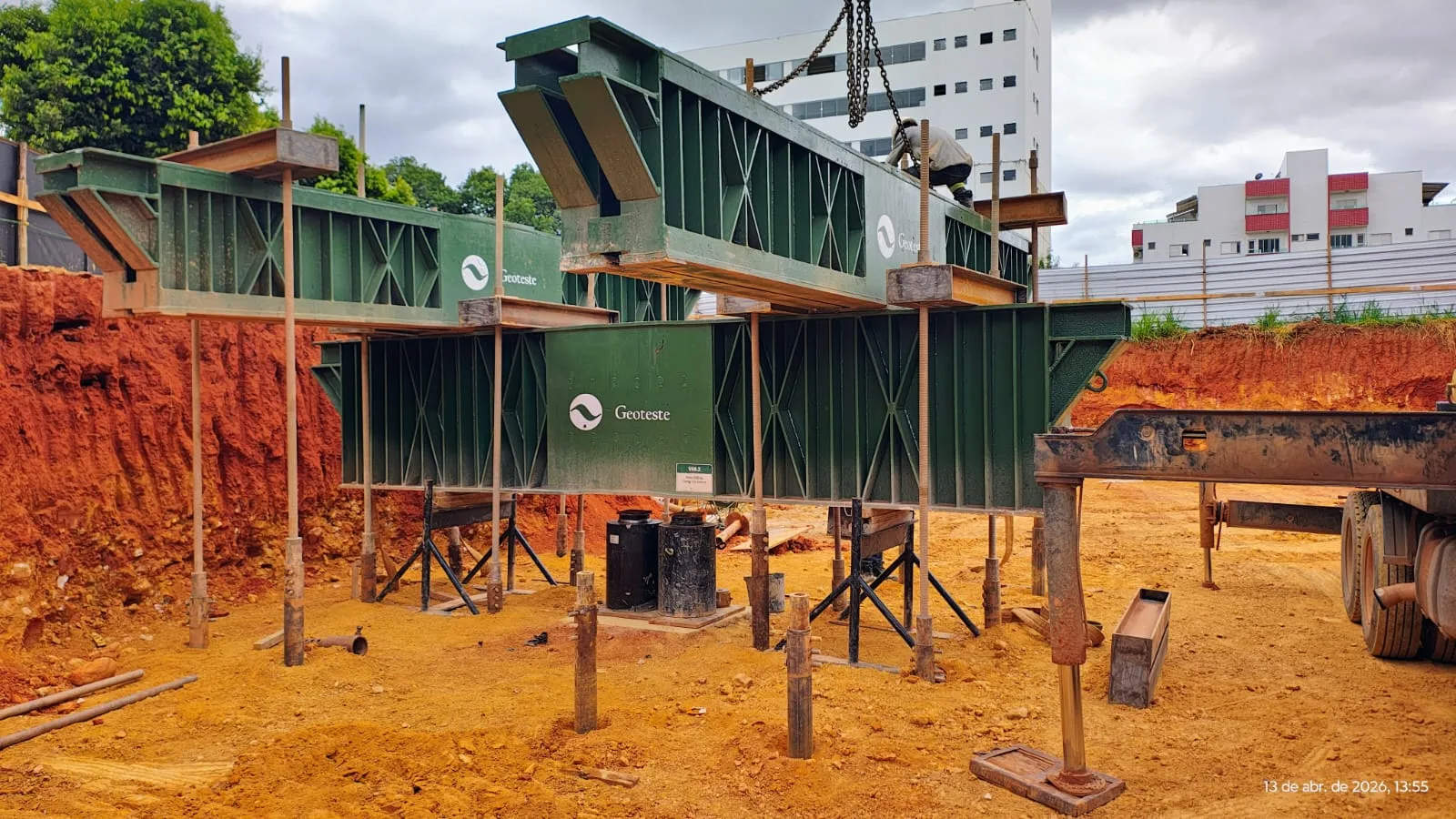
The static load test represents one of the most important procedures for evaluating the behavior of deep foundations under controlled loading. During the execution of the test standardized by ABNT NBR 16903, an axial compression load is applied incrementally, recording the corresponding displacements over time. In several design situations, the maximum load applied in the field does not reach the physical failure of the foundation element, either due to operational limitations of the reaction or due to the safety of the loading structure. In these cases, the geotechnical engineer resorts to mathematical and interpretive methods to estimate the ultimate bearing capacity from the obtained load curve.
Among the analytical approaches available in geotechnical literature, the Van der Veen method stands out as one of the most traditional tools for the interpretation and extrapolation of static load test data. However, the application of any mathematical extrapolation model requires technical rigor, understanding of load transfer mechanisms, and strict adherence to the limits imposed by the conditions observed during the test.
What the Van der Veen method is and how it works
The Van der Veen method is a mathematical extrapolation procedure based on the hypothesis that the relationship between the applied load and the corresponding displacement can be represented by an exponential function. The formulation proposed by Van der Veen assumes that the mobilized resistance tends asymptotically to a limit value, which is interpreted as the ultimate bearing capacity of the foundation.
For the graphical application of the method, the load and displacement data measured in the static load test are transformed and plotted on a specific axis system. The basic formulation relates the accumulated elastic and plastic displacement to the load increment. From the linearization of the points obtained in the final portion of the test curve, the analyst can draw a representative straight line and estimate the value of the failure load through mathematical extrapolation.
It is essential to emphasize that the values obtained by this mathematical procedure do not constitute a direct measurement, but rather an estimate based on an analytical model. The success and reliability of the interpretation depend directly on the quality of the field data recorded during the static load test performed in accordance with ABNT NBR 16903.
When load test extrapolation is technically justifiable
The extrapolation of a static load test should not be performed indiscriminately in every test. For the use of the Van der Veen method to be technically defensible, the test must meet certain fundamental requirements:
- The final portion of the load-displacement curve must show a clear tendency of curvature indicating the beginning of significant plastification of the soil-pile system.
- The maximum load reached in the field must represent a significant portion of the estimated capacity, usually exceeding the design load by a factor compatible with the safety factors of ABNT NBR 6122.
- The soil behavior during the test should not exhibit sudden brittle failures that invalidate hypotheses of continuous and progressive behavior.
- Measuring instruments, such as deflectometers and reference beams, must have operated without interruptions or spurious displacements that compromise the accuracy of the final displacements.
When the test is interrupted at very low load levels, where the response of the foundation element remains strictly in the elastic range, any attempt at mathematical extrapolation loses its physical basis. In these scenarios, the curve does not have sufficient curvature to define the asymptotic tendency described by the model, making the extrapolation result excessively dependent on arbitrary assumptions.
Limitations and precautions in interpreting results
The use of mathematical models to predict the behavior of deep foundations requires caution from the designer. Different extrapolation methods can provide distinct estimates for the failure load from the same set of experimental data. For this reason, the adoption of the Van der Veen method should be accompanied by comparison with other established interpretive criteria in geotechnical engineering, such as the Chin-Kondner criterion or the De Beer criterion.
Furthermore, the result obtained in a single static load test reflects the behavior of the tested element under the specific conditions of that point in the ground, considering the spatial variability of the subsoil, the execution method employed, and the time elapsed since the pile installation. The behavior observed in an isolated pile cannot be automatically extrapolated to the entire pile group or to the entire construction without due analysis of group effects, soil-pile interaction, and local geotechnical conditions described in subsurface investigations.
Geoteste's role in the execution and analysis of static load tests
The correct interpretation of a static load test and the proper application of methods such as Van der Veen require practical experience, high-precision instrumentation, and deep knowledge of soil mechanics. Geoteste acts with technical rigor in all stages of foundation testing campaigns, executing static load tests according to the requirements of ABNT NBR 16903 and providing detailed analyses aligned with the design guidelines of ABNT NBR 6122.
Our team of geotechnical engineers meticulously evaluates the load-displacement curve, verifies the consistency of the field data, and applies extrapolation criteria with full transparency regarding the limitations and the real behavior of the soil-pile system. Contact the Geoteste technical team to discuss the requirements of your foundation project and ensure maximum safety and structural reliability for your construction.