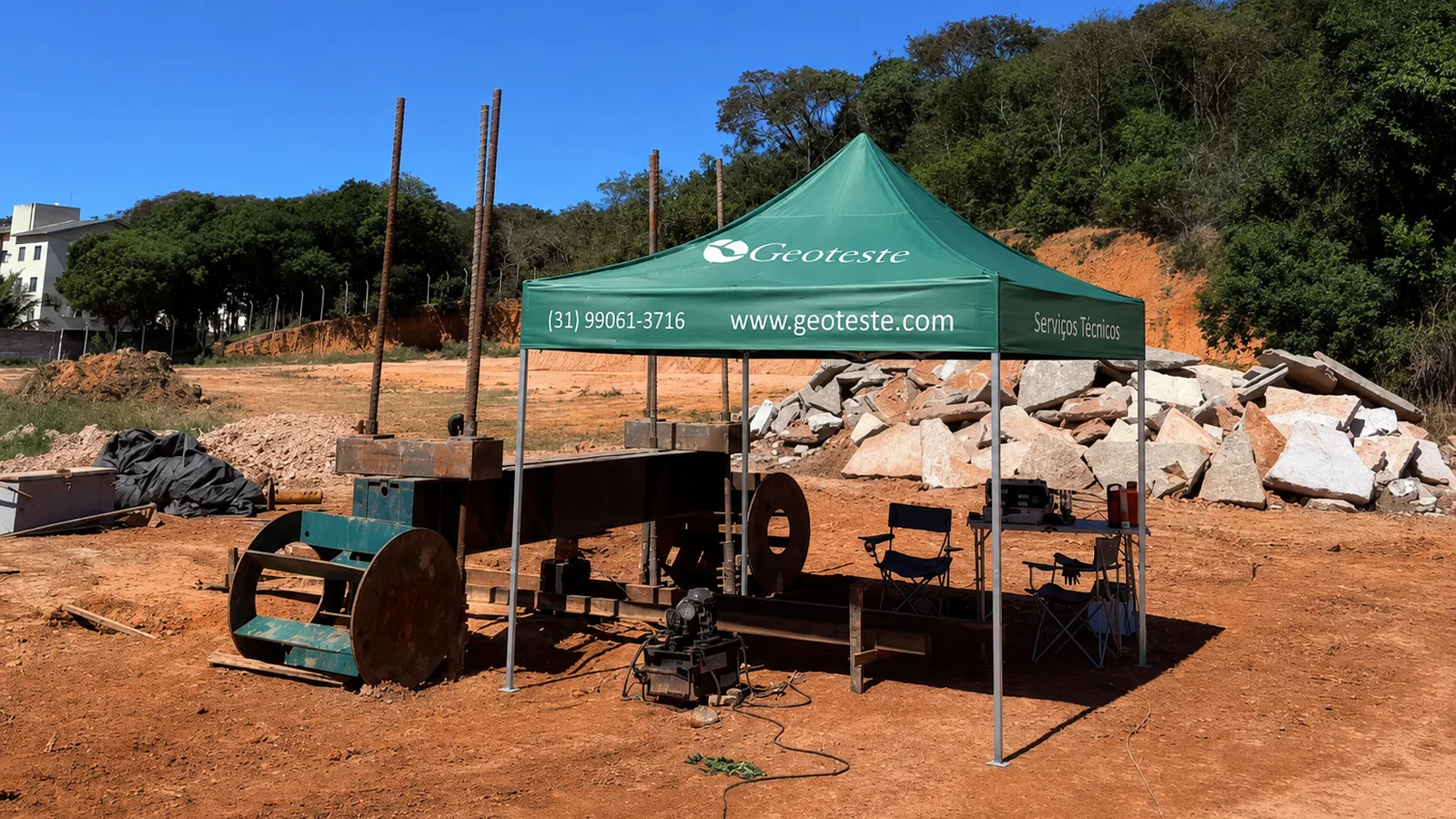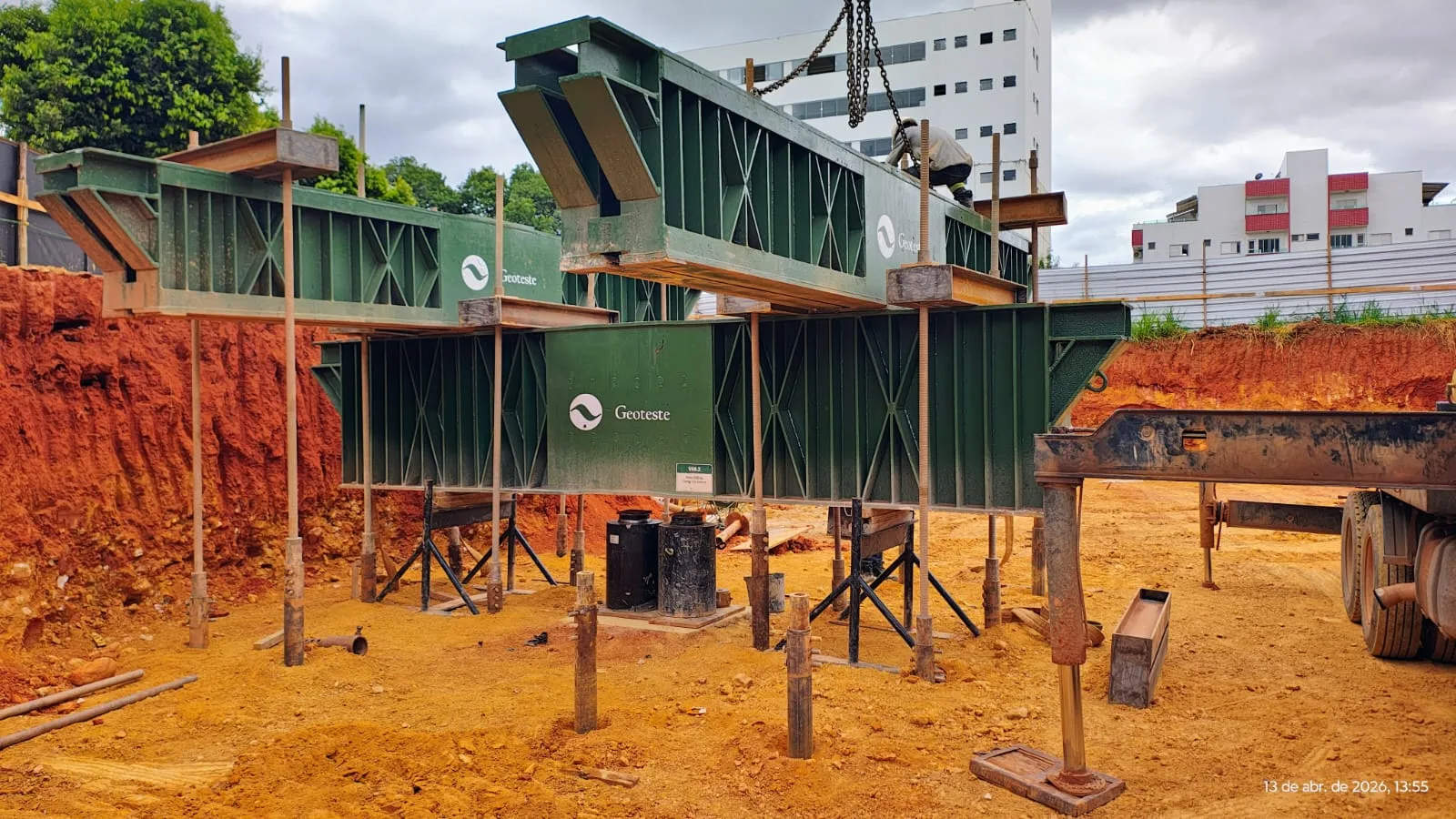
“This type of question is very common among engineers and construction managers. In this text, we explain what the engineering standard says and how to define the need for load tests.”
Performing load tests is a very important practice to ensure the safety and reliability of foundations. “Increasingly, developments have more floors, which consequently results in greater loads to be supported by the foundations.”
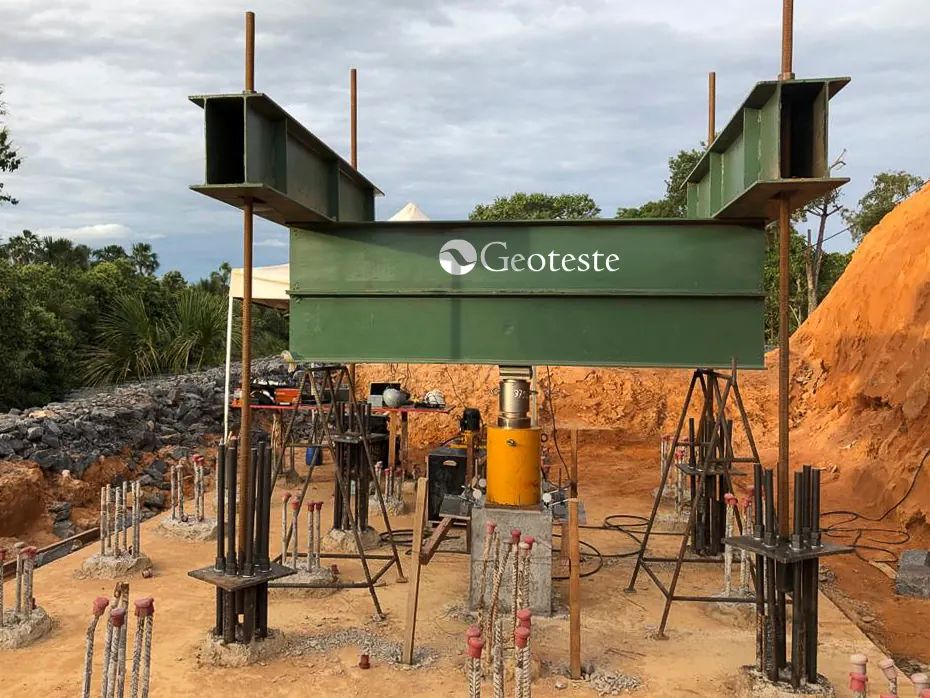
The main engineering standard regarding foundations is NBR 6122:2022 (Execution of Foundations). “This standard describes calculation and dimensioning methodologies, execution guidelines, and the quality verification of foundations. Section 9 of the standard addresses the geotechnical tests to be performed.”
The first factor to observe is the type of foundation your project is using: shallow or deep foundations. Deep foundations, also known as piles, will be the focus of this text, as they have greater complexity. Within foundation piles, we have various execution techniques, and each of them has a minimum quantity on site that mandates the performance of a load test.
Standard NBR 6122 presents a table that conditions two factors as minimum requirements for mandatory load testing: maximum stress on the pile or number of piles on the project.
The maximum stress on the pile relates to the load that was designed for each pile diameter. It is usually designed so that the loads remain below the limit, thus avoiding the mandatory requirement for a load test. The other factor is the number of piles in the project. For this, each type of execution technique has a limit, as shown in the table below:
| Pile Type | A Working stress below which load tests will not be mandatory, provided the number of piles in the project is less than the column value, in MPa | B Total number of piles in the project from which load tests will be mandatory |
| Precast | 7.0 | 100 |
| Timber | , | 100 |
| Steel | 0.5 fyk | , |
| Continuous flight auger, displacement auger, segmented auger with segmented auger (monitored) | 5.0 | 100 |
| Excavated piles with or without fluid Ø ≥ 70 cm | 5.0 | 100 |
| Root Pile | ≤ Ø 310 mm = 15.0 | 75 |
| Micropile | 15.0 | 75 |
| Segmented hollow stem auger | 5.0 | 50 |
| Franki | 7.0 | 100 |
| Excavated without fluid Ø < 70 cm | 4.0 | 100 |
| Strauss | 4.0 | 100 |
As mentioned in the table, we can observe that if the project involves continuous flight auger piles or excavated piles up to 70cm in diameter, load testing is mandatory for more than 100 piles. In the case of projects with root piles or large-diameter piles (excavated with more than 70cm in diameter), the minimum mandatory quantity is 75 piles.
All these minimum values refer to the mandatory execution of 1 static load test.
And above this quantity?
So, above this quantity, we must do the following calculation: calculate 1% of the piles in the project and round this number. This rounded number is the quantity of static load tests. For example, in a project with 270 continuous flight auger piles, 1% of this total is calculated: 270 x 1% = 2.7. Rounding up, 3 static load tests (PCE) are needed.
Should retaining piles also be counted?
Let's say that in your project you performed a retaining wall with continuous flight auger piles and then will perform the foundation, also with monitored continuous flight auger piles. Should the retaining piles also be counted?
NBR also provides an answer to this. Retaining piles must be counted if they absorb the vertical forces of the construction. If they only serve as a retaining foundation, without absorbing any load from the structure's columns and beams, they will not be counted. If part of the retaining wall is absorbing column loads, these piles must be considered in the calculation.
What about dynamic load testing?
Dynamic load testing (PDA) appears as a simpler preparation solution, without the need for a reaction structure and with the possibility of performing several tests on the same day (depending on the location and equipment, up to 20 tests can be performed).
In the case of dynamic load testing, an equivalence of 1 to 5 is adopted in relation to the static load test. That is, 1 PCE = 5 PDAs.
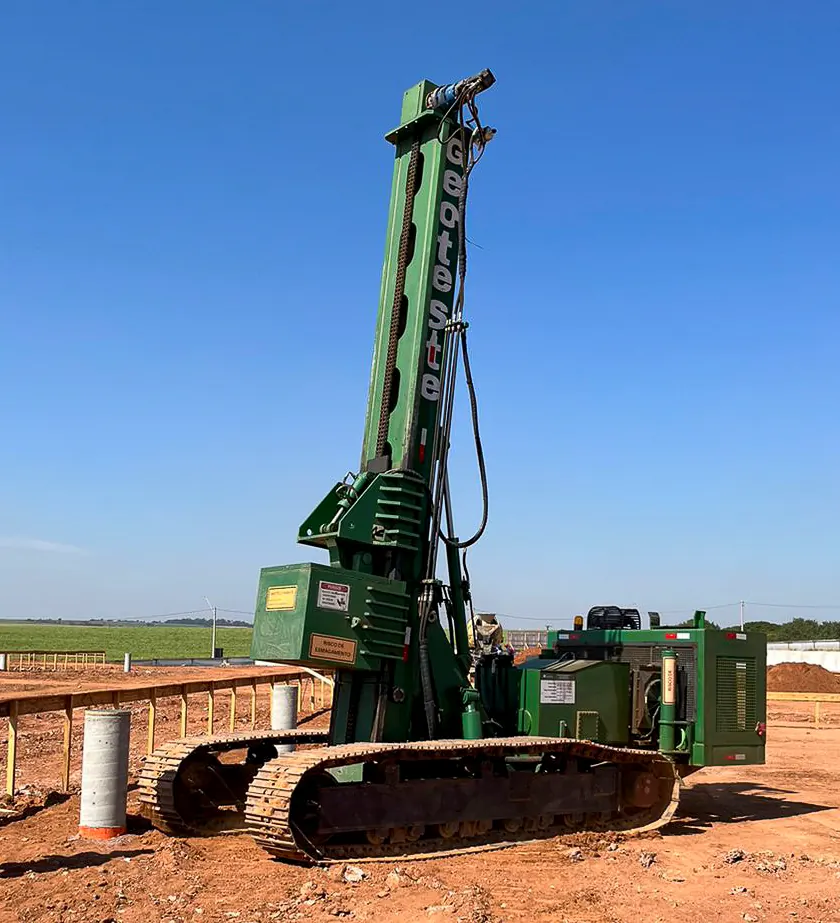
The standard also includes some exceptions and rules for mandatory load testing, such as in the case of bridges, where there is a span length that requires the test to be performed on a support, among others. If you have any questions, please feel free to contact us to clarify your doubts with our specialists.
If you have any questions about the need for these tests in your project, please contact us!